Looking to sell Karolina Larusdottir art

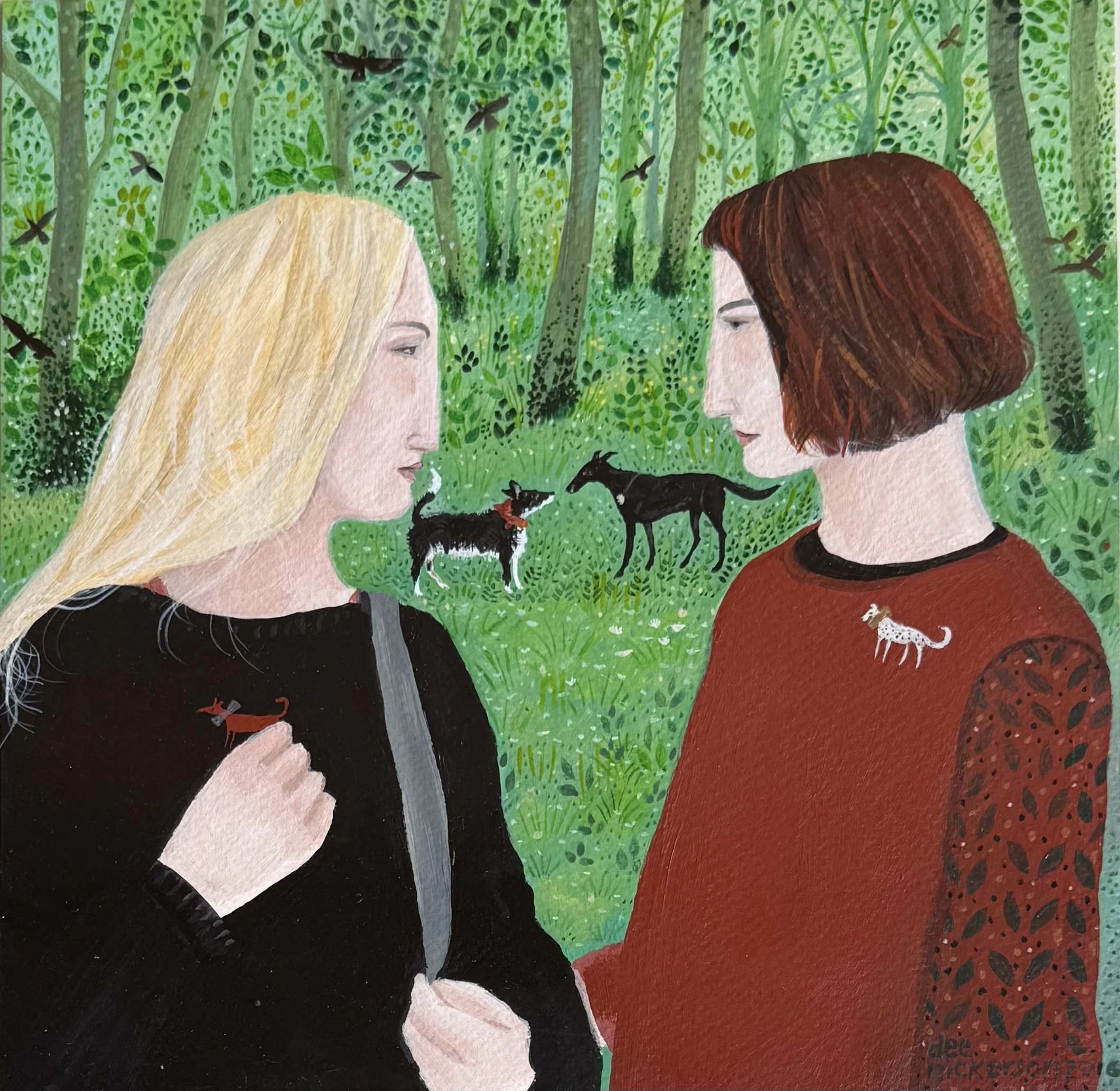
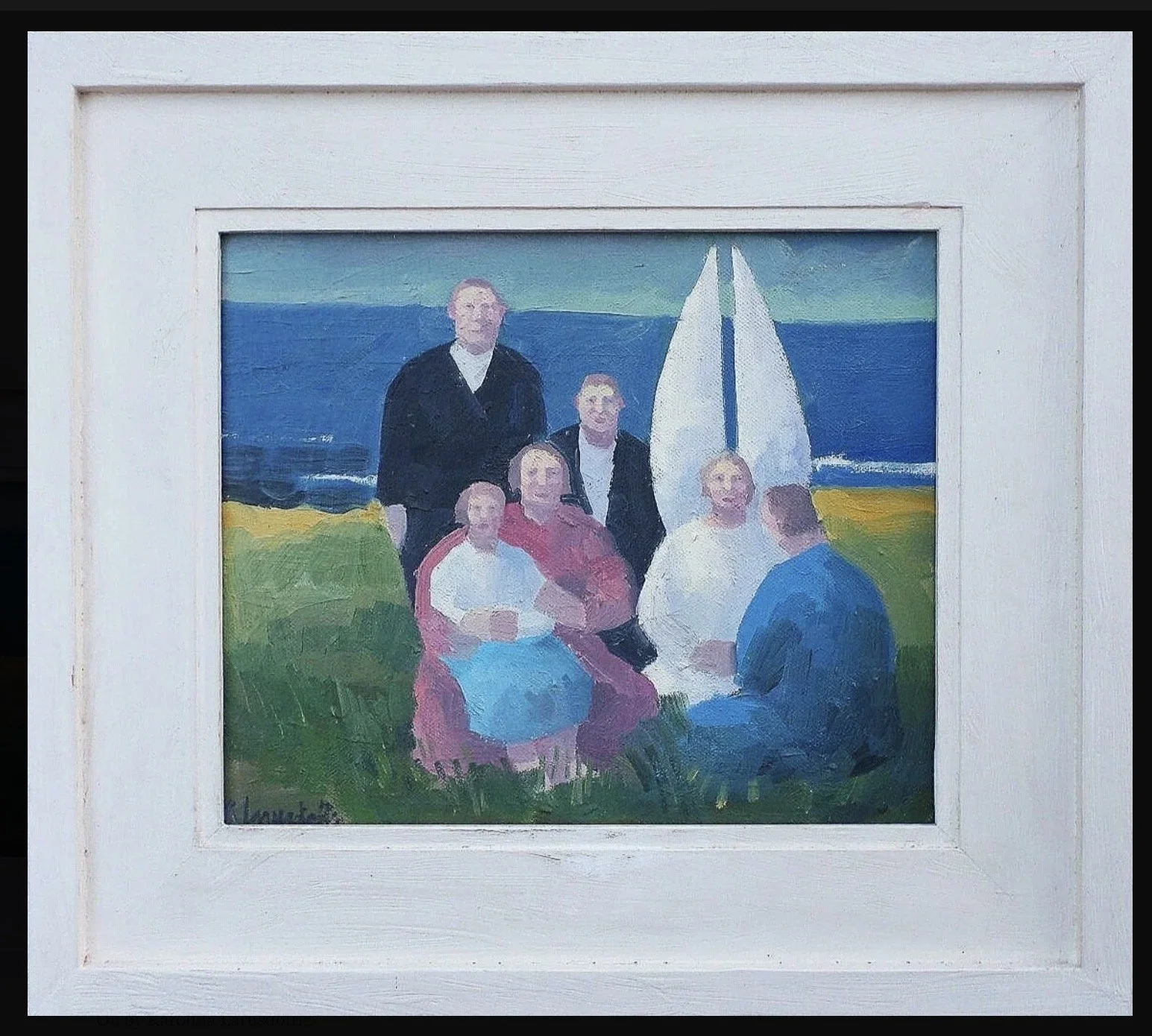
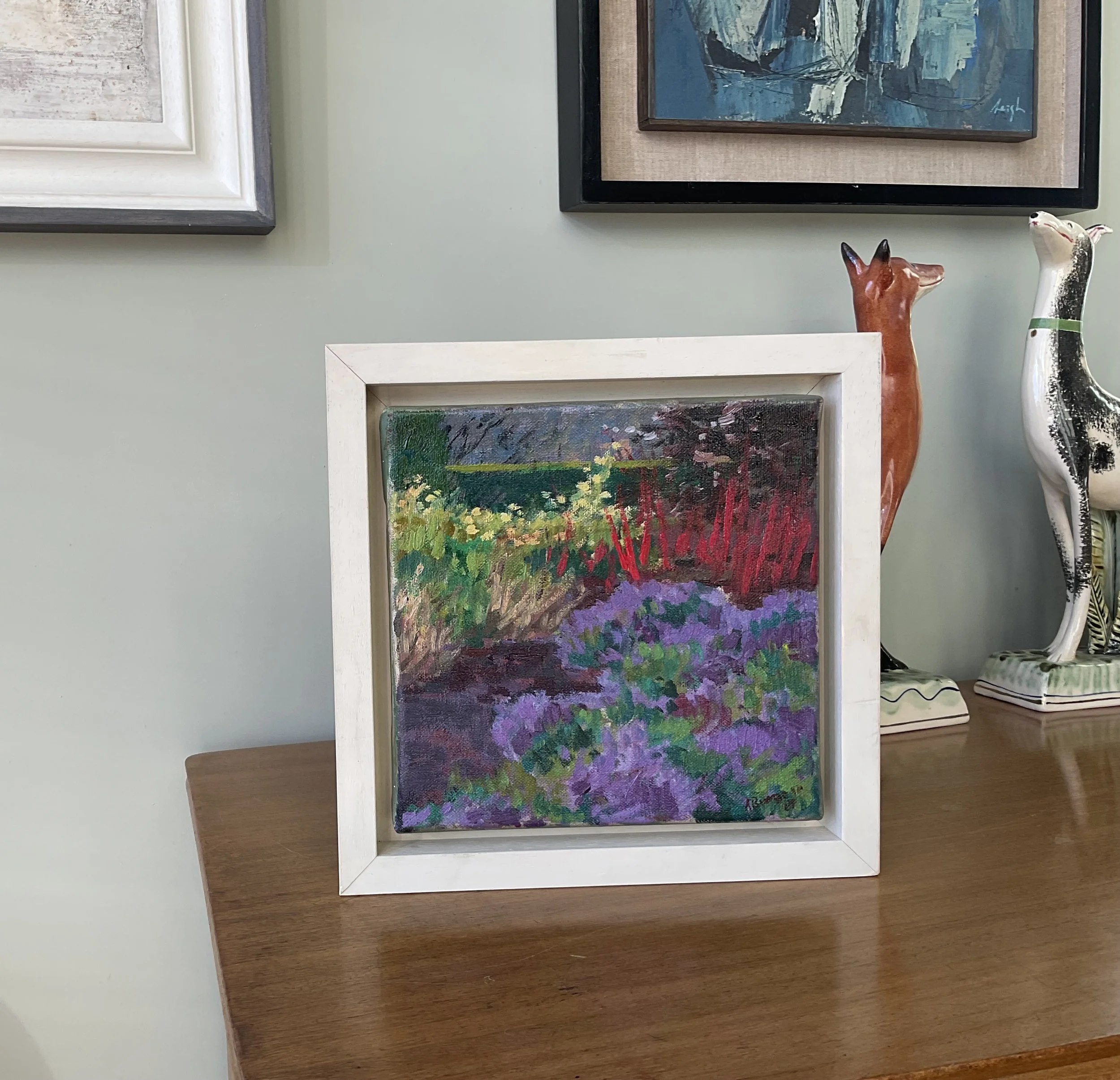
An example of an oil painting by the artist

ARE YOU LOOKING TO SELL A KARÓLÍNA LÁRUSDÓTTIR OIL ?

Over the past three decades, few contemporary artists have developed such a distinctive and instantly recognisable style as Karólína Lárusdóttir. Known for her mysterious interiors, dreamlike narratives and beautifully painted figures, her oil paintings have become highly sought after by collectors throughout the UK, Europe and beyond.

At Blondes Fine Art, we have long specialised in Modern British and Contemporary art and are always interested in acquiring original oil paintings by Karólína Lárusdóttir. Whether you own a major canvas, a smaller oil painting or an important exhibition work, we offer confidential advice and competitive purchase offers.

WHO IS KARÓLÍNA LÁRUSDÓTTIR?

Born in Iceland in 1944, Karólína Lárusdóttir studied at the Ruskin School of Drawing in Oxford before continuing her education at the Royal College of Art in London.

Although Icelandic by birth, she established her career in Britain and developed a loyal following among collectors of Contemporary British and Nordic art.

Her paintings are immediately recognisable for their:

  • Atmospheric interiors

  • Solitary female figures

  • Surreal narrative elements

  • Carefully observed domestic settings

  • Richly painted oil surfaces

Throughout her career she has remained remarkably consistent, producing works that combine technical skill with humour, mystery and psychological depth.

WHY ARE KARÓLÍNA LÁRUSDÓTTIR OIL PAINTINGS SO COLLECTABLE?

The market for Karólína Lárusdóttir's work has remained strong because her paintings occupy a unique position within contemporary art.

Unlike many artists whose work follows changing fashions, Lárusdóttir developed a visual language entirely her own. Her paintings often depict quiet domestic scenes that contain unexpected elements, creating narratives that invite interpretation while remaining deeply personal.

Collectors are particularly attracted to:

  • Original oil paintings

  • Interior scenes

  • Figurative compositions

  • Early exhibition works

  • Large-scale canvases

Many buyers appreciate the way her paintings balance decorative appeal with intellectual and emotional content.

THE APPEAL OF KARÓLÍNA LÁRUSDÓTTIR'S OIL PAINTINGS

One of the reasons her paintings continue to perform well in the secondary market is their enduring decorative quality.

Her compositions frequently feature:

  • Elegant interiors

  • Patterned fabrics

  • Architectural details

  • Carefully arranged objects

  • Soft but sophisticated colour palettes

These qualities make her paintings equally appealing to serious collectors and interior designers.

As a result, demand for strong original oils remains consistently healthy.

SELLING A KARÓLÍNA LÁRUSDÓTTIR PAINTING

If you own an original Karólína Lárusdóttir oil painting and are considering selling, several factors can influence value:

SUBJECT MATTER

Collectors often seek paintings featuring:

  • Interior scenes

  • Seated female figures

  • Domestic narratives

  • Surreal compositions

  • Cats, birds and symbolic animals

SIZE

Larger and more ambitious paintings typically attract greater interest, particularly works created for major exhibitions.

PROVENANCE

Paintings with exhibition history, gallery provenance or publication references can command increased attention from collectors.

CONDITION

As with all contemporary paintings, condition remains important when assessing market value.

WHY SELL THROUGH BLONDES FINE ART?

At Blondes Fine Art we have built a reputation as specialists in Modern British and Contemporary art.

Unlike general auction houses, we actively market works directly to collectors who understand and appreciate Karólína Lárusdóttir's unique contribution to contemporary painting.

Our service includes:

  • Free valuation advice

  • Immediate purchase offers

  • Discreet private sales

  • Probate valuations

  • No auction fees

  • Nationwide collection throughout the UK

We regularly work with private collectors, executors, solicitors and families seeking expert advice regarding the sale of individual paintings and entire collections.

WE ARE ACTIVELY BUYING KARÓLÍNA LÁRUSDÓTTIR PAINTINGS

We are currently seeking:

  • Original oil paintings

  • Exhibition works

  • Large-scale canvases

  • Early paintings

  • Important figurative compositions

If you own a Karólína Lárusdóttir painting and are considering selling, we would be delighted to hear from you.

Photographs can usually be assessed quickly and confidentially, allowing us to provide guidance on current market values and demand.

KARÓLÍNA LÁRUSDÓTTIR'S PLACE IN CONTEMPORARY ART

Today, Karólína Lárusdóttir remains one of the most distinctive figurative painters working in Britain during the late twentieth and early twenty-first centuries.

Her paintings combine narrative storytelling, technical accomplishment and visual originality in a way that few contemporary artists have achieved.

As collectors continue to seek high-quality figurative painting, demand for her best oil paintings remains strong.

CONTACT BLONDES FINE ART CALL US TODAY ON 07519639386

If you are looking to sell a Karólína Lárusdóttir oil painting, Blondes Fine Art would be pleased to offer confidential advice.

We are always interested in purchasing quality works by Karólína Lárusdóttir and can provide expert guidance based on current market demand.

Whether you own a single painting or an entire collection, we are happy to help.


Julian Trevelyan Mass observation and the Bolton Prints

Blondes Fine Art are always interested in purchasing the Bolton print series so do contact us if you are thinking of selling one.

Julian Trevelyan, Mass Observation and the Famous Bolton Prints

Few artists are more closely associated with the visual legacy of the Mass Observation movement than Julian Trevelyan. While he is celebrated today as one of Britain's finest twentieth-century printmakers, his time working in Bolton during the late 1930s produced some of the most fascinating images of industrial Britain ever created.

Through collages, photographs, paintings and later prints, Trevelyan captured the spirit of a Lancashire town at a moment of enormous social change. His Bolton works remain among the most important artistic records of the pioneering Mass Observation project and continue to attract collectors of Modern British art today.

Julian Trevelyan and Mass Observation

In 1937, artist Julian Trevelyan joined the groundbreaking Mass Observation project, an ambitious attempt to record everyday life in Britain. Founded by anthropologist Tom Harrisson, poet Charles Madge and filmmaker Humphrey Jennings, Mass Observation sought to document ordinary people's lives rather than the views of politicians or institutions. Bolton became the project's first major field study and was given the codename "Worktown".

Trevelyan was invited by Harrisson to travel north and become one of the project's artist-observers. Unlike traditional documentary artists, he brought with him a Surrealist background gained in Paris and a fascination with experimental collage techniques.

The result was a body of work unlike anything else being produced in Britain at the time.

Worktown: Recording Everyday Life in Bolton

Mass Observation researchers immersed themselves in every aspect of life in Bolton. They observed workers leaving factories, people drinking in pubs, shoppers in the market, football crowds and families enjoying their leisure time. The aim was to create a complete picture of British working-class life.

Trevelyan's contribution was unique.

Rather than simply recording what he saw, he transformed industrial landscapes into imaginative compositions. Cotton mills, chimneys, terraced housing and factory skylines became the raw material for paintings, photographs and collages that combined documentary observation with artistic invention. Bolton Museum describes his work as among the most successful in expressing the ideals of the Mass Observation movement.

The Famous Bolton Collages

One of the most remarkable aspects of Trevelyan's Bolton period was his use of collage.

Carrying a battered suitcase filled with newspapers, magazines, catalogues, scissors and glue, he would set up in the streets and outskirts of Bolton, creating artworks directly from the industrial landscape around him. He famously incorporated fragments of newspapers and photographs into his compositions, turning scraps of printed material into chimneys, cobbled streets and mill buildings.

His 1937 collage Bolton remains one of the most important surviving works from the Worktown project. The piece depicts mills and factory chimneys rising above the town, while hidden newspaper fragments reference contemporary political events including the Spanish Civil War and the rise of fascism in Europe.

Today, these collages are recognised not only as important works of art but also as social documents that capture the mood and atmosphere of industrial Britain before the Second World War.

Julian Trevelyan's Bolton Prints

Although his early Bolton works were primarily collages, photographs and watercolours, Trevelyan later returned to the subject.

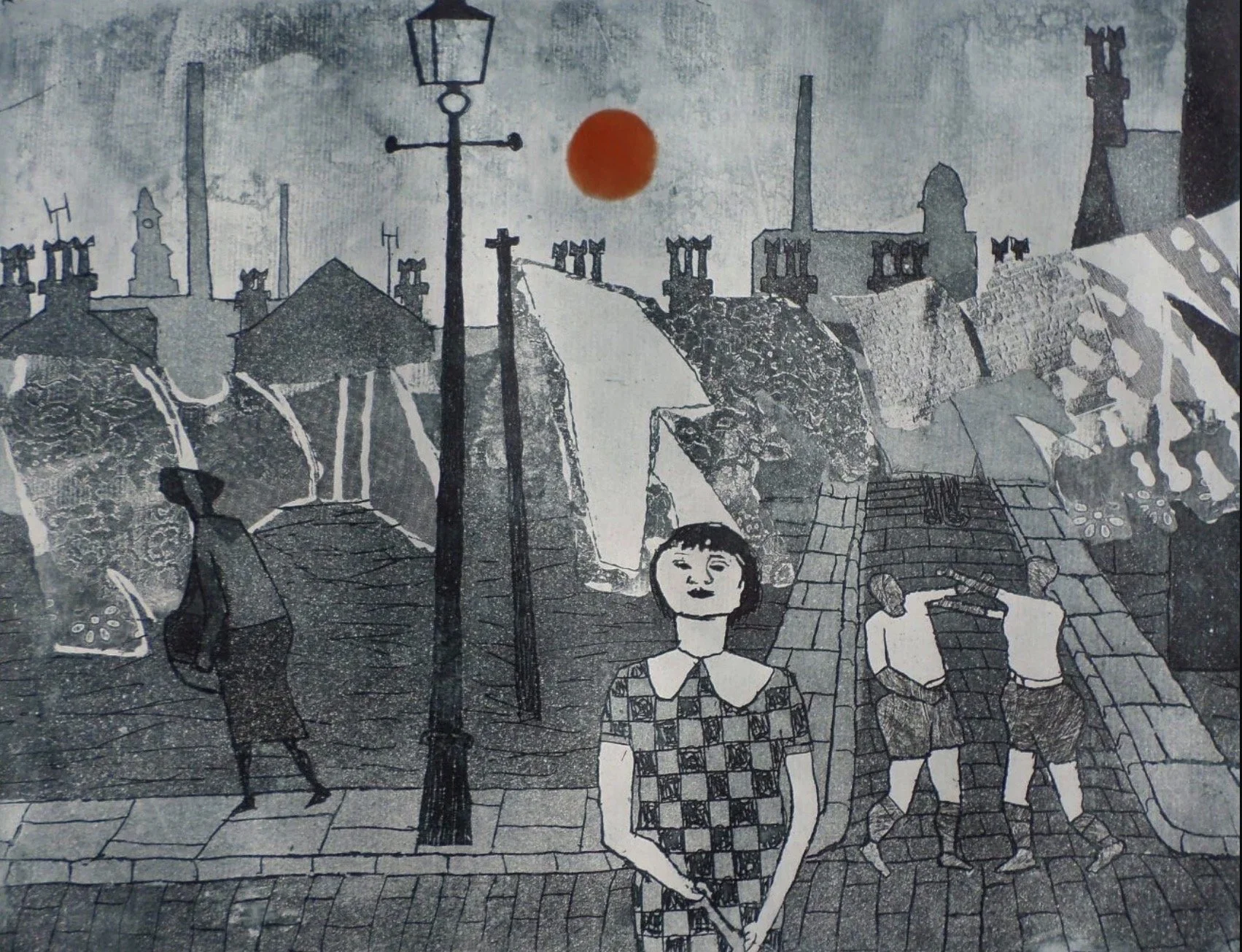
When Mass Observation revisited Bolton in 1960, Trevelyan joined the project once again. Following this visit he produced a series of prints depicting Bolton landmarks and street scenes, including views of the Market Hall and other familiar locations.

These Bolton prints are particularly sought after by collectors because they combine:

  • Historical significance

  • Strong regional interest

  • Trevelyan's masterful printmaking technique

  • Connections to the Mass Observation movement

For collectors of Lancashire art and Modern British printmaking, they represent an important intersection between social history and fine art.

Why Collect Julian Trevelyan's Bolton Works?

Interest in Trevelyan's Bolton-related works has grown steadily in recent years.

Collectors are attracted by:

  • Their connection to the famous Mass Observation project

  • Their importance in British social history

  • Their distinctive blend of Surrealism and documentary observation

The Worktown archive now contains hundreds of artworks, photographs and documents relating to the project, with Bolton Museum holding one of the most important collections of Trevelyan's Bolton material. The archive includes collages, watercolours, drawings, photographs and prints that provide a unique visual record of Britain in the 1930s and beyond.

Julian Trevelyan's Place in Modern British Art

Today, Julian Trevelyan occupies a distinctive position within Modern British art.

Unlike many post-war printmakers, he combined influences from Surrealism, documentary observation and social history. His Bolton works demonstrate how art can be both imaginative and historically important.

For many collectors, the Worktown collages and Bolton prints represent some of the most original works of his entire career. They show an artist responding directly to the realities of industrial Britain while bringing to the subject an inventiveness rarely seen in documentary art.

Julian Trevelyan Prints for Sale

At Blondes Fine Art, we specialise in Modern British prints and paintings, including works by Julian Trevelyan.

We are always interested in acquiring:

  • Julian Trevelyan etchings

  • Bolton prints

  • Worktown-related works

  • Signed limited editions

  • Original drawings and paintings

If you are looking to buy or sell a Julian Trevelyan print, we would be delighted to offer advice on availability, rarity and current market values.

Conclusion

The story of Julian Trevelyan and Bolton is one of the most fascinating chapters in twentieth-century British art. Through the Mass Observation project, Trevelyan transformed the industrial landscape of Lancashire into a series of powerful images that continue to resonate nearly ninety years later.

His Bolton collages, photographs and prints remain vital records of everyday British life and stand among the most important artistic achievements to emerge from the Mass Observation movement.

Roy Turner Durrant a very Modern British Artist

Who was Roy Turner Durrant and where does he fit into the Modern British Art jigsaw puzzle?

Roy Turner Durrant occupies an interesting and increasingly important position within Modern British art history. Although he never achieved the household-name status of artists such as Ben Nicholson, Patrick Heron, or Terry Frost, he is regarded by many specialists as a significant contributor to the development of post-war British abstraction.

A Bridge Between Landscape and Abstraction

Born in Suffolk in 1925, Roy Turner Durrant belonged to the generation of artists that emerged after the Second World War when British art was undergoing profound change.

Many artists of his generation were moving away from traditional representational painting and exploring abstraction, colour relationships and constructed space.

Durrant's work sits within this movement, but unlike some of the more radical abstract artists of the period, his paintings often retained a subtle connection to landscape and the natural world.

This places him somewhere between the geometric abstraction of Victor Pasmore, the landscape-based abstraction of Peter Lanyon and the colour abstraction of Patrick Heron.

The East Anglian Connection

One reason Durrant is important historically is his role within the East Anglian art scene.

While much attention in British art history focuses on London and St Ives, East Anglia developed its own vibrant artistic culture after the war. Alan Reynolds is another example of of an East Anglian artist from this period who also hailed from the rural parts of Suffolk.

Durrant became one of the region's most individual voices, producing work that reflected both modernist ideals and a strong sense of place. Today, he is often discussed alongside other artists associated with East Anglian Modernism rather than the more widely known St Ives School.

I think it is always interesting to review the factors that impact on an artist as it helps us understand their output.

Roy Turner Durrant was the son of a Cobbler in Lavenham, Suffolk a market town with wonderful timber framed buildings, but it was the landscapes around the town that first influenced the work of Durrant rather than the buildings themselves. His generic early neo-romantic landscapes possessed a magical association with ‘place’ and often indulged his facination with the contraptions reminiscent of Leonardo da Vinci.

In fact his first preoccupation was with these mechanical flying machines which supported his youthful ideas of joining the RAF. He would scribble these flying machines all day long and they can be seen in his early work produced when he attended Camberwell School of Art between 1949 - 1952.

His main tutors were Keith Vaughan, John Minton and Michael Rothenstein and it is the later who was encouraging of Durrant’s flying machines and his influence can be seen in these early works.

He continued to be profoundly influenced by the out doors and by the landscape around his native Suffolk for much of the 1950’s.

The late 1950’s - Modern British Art & Poetry

The late 50’s was a significant time in the development of Modern British Art and Durrant was very much involved in the London Art scene at that time, having works in the Royal Academy summer exhibitions and in 1957 two significant solo exhibitions. In 1959 he was selected for inclusion in the prestigious John Moores Liverpool exhibition this was no small achievement with the main prize going to Patrick Heron.

He continued to enjoy a London based life for the remainder of the decade and was increasingly immersed in poetry. He gleaned a lot from Beckett, Joyce and Dylan Thomas while a recurring theme of Inscape started to enter his world and feature in the titles of his paintings.

He said about ‘Inscape’

’I think it is indefinable . Its significance is spiritual. I do not paint places as such. Rather I try to paint the spirit of a place’.

Durrant married in 1959 and had 4 sons which meant that he had to look for a day job to pay the bills working for Vickers, the aircraft firm, before taking a roll as director of Heffers Gallery - Cambridge , from 1963 - 1976.

The development of collage and the Inscape forms.

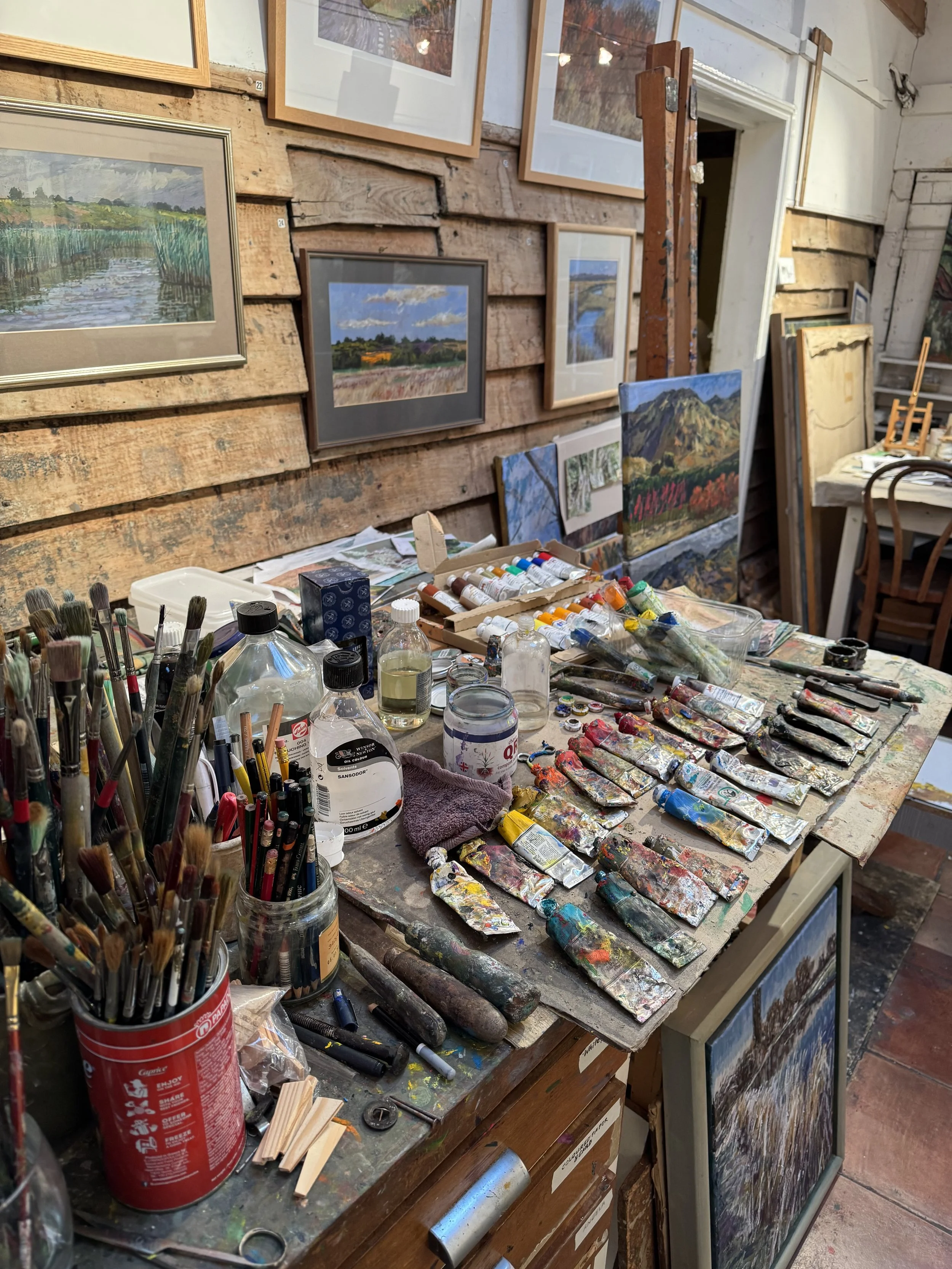
During the 1970’s his work began to change again . His studio was in a shed at the bottom of his garden and he would disappear there for hours. He produced some very interesting collage work but the artists ‘inner eye’ was always focused on his native Suffolk.

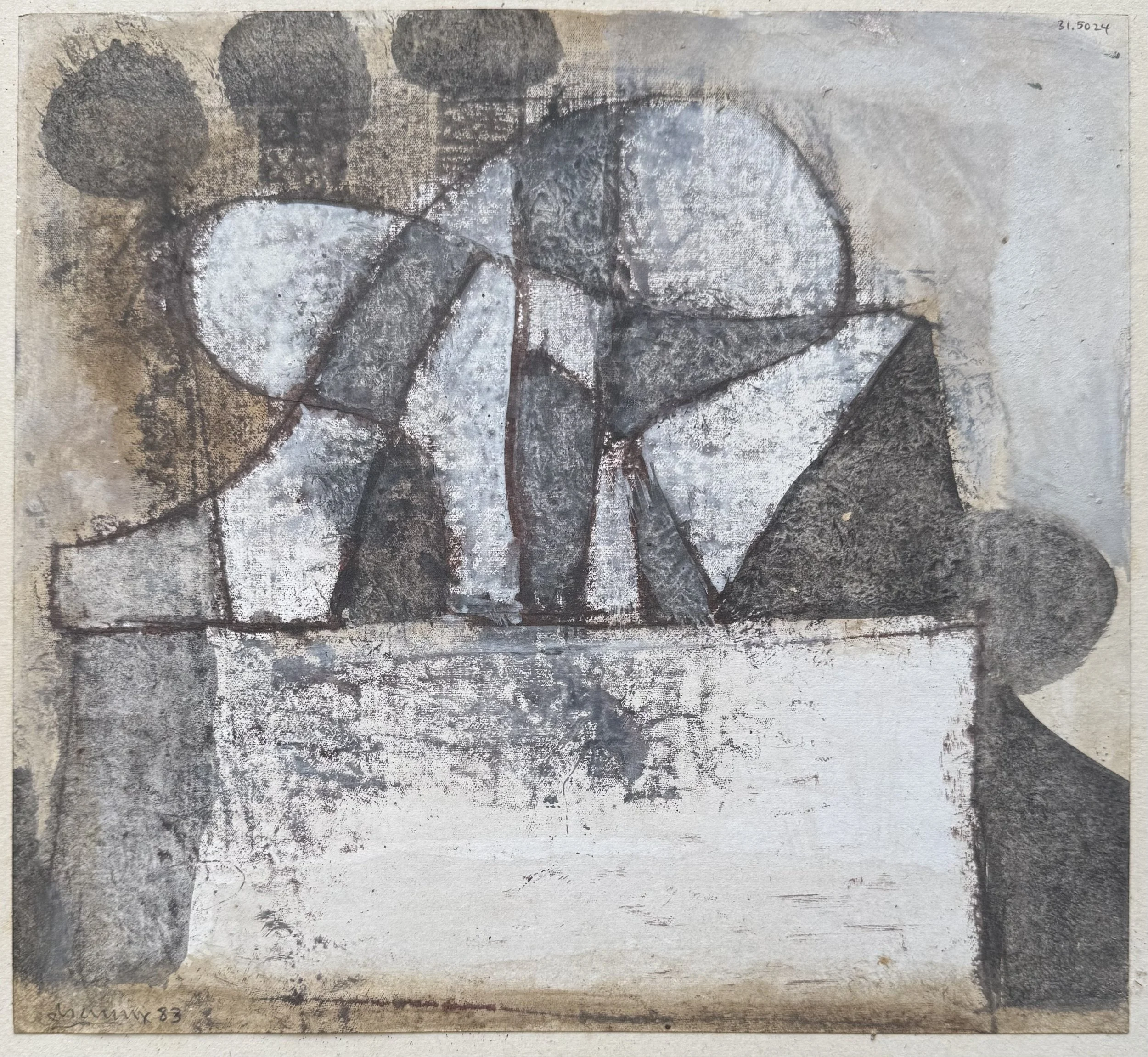
During the late 70’s into the 80’s it was the blue -grey ground, muted colouring and atmospheric feel of his abstract paintings that have proved to be some of his most sought after work. In 2008 Fine Art Society London held a one man show of his work from this period, which proved to be commercially very successful.

Why His Reputation Is Growing

In recent years there has been a significant re-evaluation of lesser-known post-war British artists.

Collectors and museums have increasingly recognised that British abstraction was far broader than the handful of artists traditionally featured in survey books.

As a result, interest has grown in:

  • Regional Modernism

  • East Anglian artists

  • Post-war geometric abstraction

  • Artists working outside London

Roy Turner Durrant fits perfectly into this reassessment.

His work now appeals to collectors seeking artists who were genuinely involved in the development of British Modernism but remain undervalued compared with their more famous contemporaries.

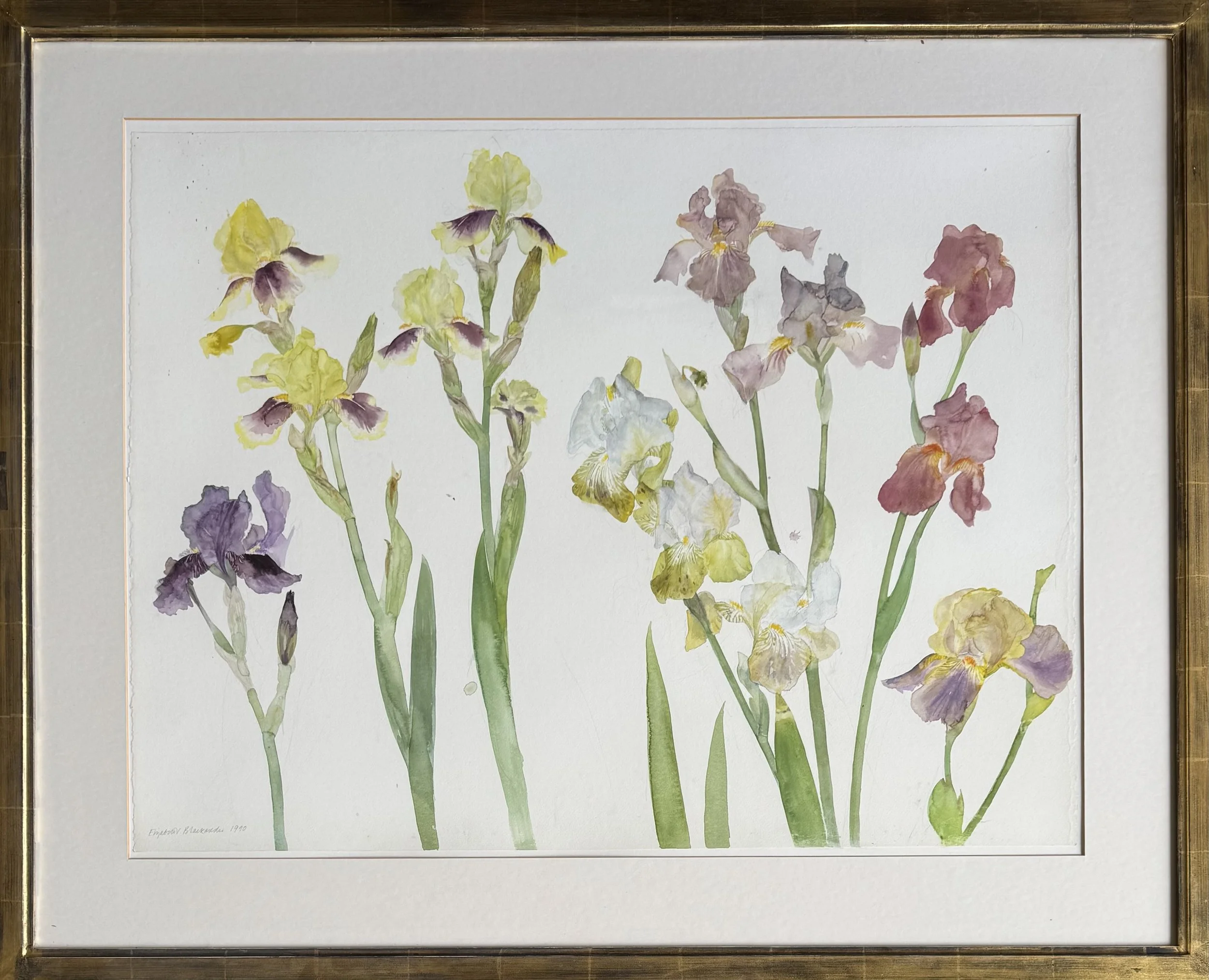
Elizabeth Blackadder Iris paintings

The large work featured below is currently available at Blondes Fine Art

Elizabeth Blackadder Iris Watercolour Paintings – Elegance, Colour and Botanical Beauty

Few artists captured the fragile beauty of flowers with the sensitivity and refinement of Elizabeth Blackadder. Among her most admired works, her iris watercolour paintings remain especially sought after by collectors of Modern British and Scottish art.

Delicate yet highly sophisticated, Blackadder’s iris paintings combine botanical observation with an unmistakable sense of atmosphere, balance, and quiet emotion. Today, they continue to attract collectors worldwide for both their artistic importance and timeless decorative appeal.

Elizabeth Blackadder and the Art of Watercolour

Elizabeth Blackadder became internationally recognised for her mastery of watercolour, using the medium to create works of extraordinary subtlety and precision.

Watercolour suited her artistic approach perfectly. Through transparent washes and controlled detail, she was able to capture the softness and movement of petals with remarkable delicacy.

Among all floral subjects, irises became one of her most iconic themes, she returned to painting these flowers time and time again making studies of the plants in her garden and transferring them to paper so they could be enjoyed all year round in your home.

The Iris was her favourite flower, its perfectly balanced shape where the three central petals stand up, and the three outer ones drop down. There is a floral geometry which enhances its beauty.

The garden was an extension of Elizabeth Blackadder’s studio , she would go there with its Iris beds, its pond, and self seeding poppies amongst the herbaceous borders. She would pick flowers and return to her studio in her house and place them in a jug and see if they were ready to paint . Sometimes she would leave them for a day or so to ‘relax’ a little.She always used heavy handmade paper often leave an image unfinished returning to it sometime later. She was not impatient having several paintings on the go at any one time.

Why Elizabeth Blackadder’s Iris Watercolours Are So Popular

All Irises belong to the kingdom of heaven !

For the Ancient Greeks, the Iris was a symbol of regality; in the Middle Ages, it became the flower of chivalry. Dutch and old masters included it in pictures of Christ to show his royal decent. More recently they were painted by Van Gogh and Monet who painted them where they grew in his garden in Giverny along a gravel path or beside the lily pond.

Collectors are drawn to Elizabeth Blackadder iris watercolours because they combine:

  • Botanical accuracy

  • Minimalist composition

  • Elegant colour harmonies

  • Emotional restraint and calmness

Her iris paintings are rarely overcrowded. Instead, individual blooms often float against pale, almost empty backgrounds, allowing every line and tonal variation to become important.

This restrained style gives the paintings a meditative quality that feels both modern and timeless.

Blackadder’s handling of iris petals — with their folds, translucency, and subtle shifts in colour — demonstrates her extraordinary technical control as a watercolourist.

The Influence of Japanese Art

A major influence on Blackadder’s flower paintings was Japanese art and design.

During visits to Japan, she became fascinated by:

  • Simplicity of arrangement

  • Use of negative space

  • Delicate asymmetry

  • Quiet visual balance

These ideas became central to her mature style.

In many iris watercolours, the surrounding empty space is just as important as the flower itself. The result is a composition that feels calm, refined, and deeply contemplative.

This Japanese influence helped distinguish Blackadder’s flower paintings from more traditional botanical art.

Botanical Observation and Artistic Sensitivity

Elizabeth Blackadder’s fascination with flowers began early in life and remained central throughout her career.

She regularly studied plants at the Royal Botanic Garden Edinburgh, carefully observing rare flowers, structure, and colour variations.

However, her paintings were never purely scientific studies.

Instead, she transformed botanical subjects into poetic and highly personal works of art. Her iris watercolours capture:

  • Fragility

  • Lightness

  • Seasonal beauty

  • A sense of stillness and reflection

This balance between observation and emotion is one of the reasons her work remains so admired today.

Collecting Elizabeth Blackadder Iris Watercolours

Interest in Elizabeth Blackadder’s flower paintings has remained exceptionally strong within the Modern British art market.

Collectors particularly seek:

  • Original iris watercolours

  • Botanical studies

  • Signed works on paper

  • Delicate floral compositions

Her work appeals to collectors looking for:

  • Major female British artists

  • Scottish contemporary art

  • Decorative yet museum-quality paintings

  • Refined botanical subjects

Because original watercolours are relatively limited in availability, important examples can command significant prices when they appear on the market

At Blondes Fine Art, we specialise in Modern British and Scottish art, including original works and prints by Elizabeth Blackadder.

We regularly handle:

  • Iris watercolours

  • Botanical paintings

  • Original etchings

  • Signed limited edition prints

If you are looking to acquire a specific Elizabeth Blackadder iris painting, we are happy to help source available works through our private collector network.

Selling an Elizabeth Blackadder Iris Painting

We are actively seeking works by Elizabeth Blackadder, particularly:

  • Iris watercolours

  • Floral studies

  • Botanical paintings

  • Signed prints and etchings

Our service includes, immediate purchase options & no auction fees

If you are considering selling a work by Elizabeth Blackadder, we are happy to provide confidential advice based on current market demand.

The Lasting Appeal of Elizabeth Blackadder’s Iris Paintings

Elizabeth Blackadder’s iris watercolour paintings remain among the most elegant botanical works produced by a British artist in the 20th century.

Their combination of:

  • Delicacy

  • Technical mastery

  • Minimal beauty

  • Emotional subtlety

ensures they continue to resonate with collectors, designers, and admirers of Modern British art around the world.

Today, her iris paintings stand not only as exquisite flower studies, but also as timeless examples of quiet artistic sophistication.

Who is the wildlife artist Amie Haslen?

We caught up with the lovely Amie Haslen for a chat over a cup of tea when we collected the 4 works from her that will feature in our Summer 2026 exhibition .

We have known Amie for a number of years and it was a treat to sit down with her recently to have a chat about her work and find out a little more about her art.

Q: Amie, it’s lovely to see you and to get a moment to talk to you about you and your art. You live here in beautiful Suffolk and it clearly has had an impact on your work?

Amie: Yes, I grew up in this wonderful part of Suffolk and I love going out into the garden and walking around the fields and hedgerows looking at the wildlife. I like to sit and observe the insects and moths and butterflies, I take my sketch book and draw from life.

Q: So, do your paintings relate directly to the things you see in the field?

Amie: Yes, they do relate to what I see but are not a direct representation. I sketch the wildlife together with the plants and later produce a painting or print based on my recollection.

Q: Is it right that you are known to set moth traps in the evenings?

Amie: Yes that is correct. Don’t worry, it’s a completely humane way to catch nocturnal insects and it gives me the perfect opportunity to study them closely and produce accurate sketches for my paintings and prints. It’s so much better to draw from real life and I am constantly astonished by the beauty and variety of the insects that are all around us but rarely observed. Everything is completely unharmed by the process and released carefully at the appropriate time.

Q: We see you work in different mediums are you always trying out new things?

Amie: Yes, fairly recently I was taught the technique of Japanese woodblock which I thoughly enjoyed and have been pleased with the work I am producing.

Q: Congratulations on now being a member of the Society of Wildlife Artists, that must be wonderful to have been recognised by them?

Amie: Yes, very much so and to participate in their annual exhibitions at Mall Galleries is great.

Q: Can you tell us how you got started painting?

Amie: Well I have painted for as long as I can remember. My dad is an artist (Andrew Haslen) and when I was growing up I remember thinking that everyone was a wildlife artist! My dad’s studio is here at home and there was always someone visiting who was also an artist which is why I thought that is what everyone did. I can remember one Christmas being asked what I wanted by everyone in my family and I told them all that I wanted art materials. So everyone took me at my word and I had a mountain of materials but nothing else and I remember then thinking perhaps I should have asked for a few other things as well!

Anyway, I guess I always wanted to draw and paint, my mum [Meggan] was a sign writer when I was small so I grew up in a very artistic house. When I was able I went to Aberystwyth university and studied fine art and print making. It was such a lovely place with magnificent scenery and was quite inspirational. My practice has developed over the years since I returned home in 2013.

My parents ran The Wildlife Gallery in Lavenham , as you know from the Becker exhibitions, and I helped out when I could so again I spent time with wildlife artists and their work. I think when I left university I actively resisted painting wildlife and focused more on landscapes but inevitably, I have been captivated by the abundance of wildlife that surrounds me and my home in rural Suffolk and I am never happier than when I am among it making my art.

Q:What projects are you doing at the moment ?

Amie: Over the last year I have had the great pleasure of being part of the Massingham Heath re-wilding project. Over 30 SWLA artists have been involved, documenting this special Norfolk farm and restored heath throughout the seasons.

l've been able to make quite a few visits, including a week long residency in May 25 and numerous day trips since then.

You can read more about the project on the SWLA website and hear Martha Kearney's open country episode recorded on the Heath on BBC sounds.

I have, of course, been concentrating on the plant and insect life, of both there is an abundance. Small heath, brown argus, dingy skipper, green hairstreak butterflies- small eggar caterpillars-moths, crickets, bees and bugs a plenty. Great swathes of mullein, scabious, poppies, kidney vetch and pockets of mouse-eared hawkweed, toadflax, rock-rose and clustered bellflower. And I'm only naming a few! It is a wildlife artist's playground, and more importantly a home for all of these living things. I have so many sketches and watercolours now and am producing work for an exhibition later this year. It is very exciting.

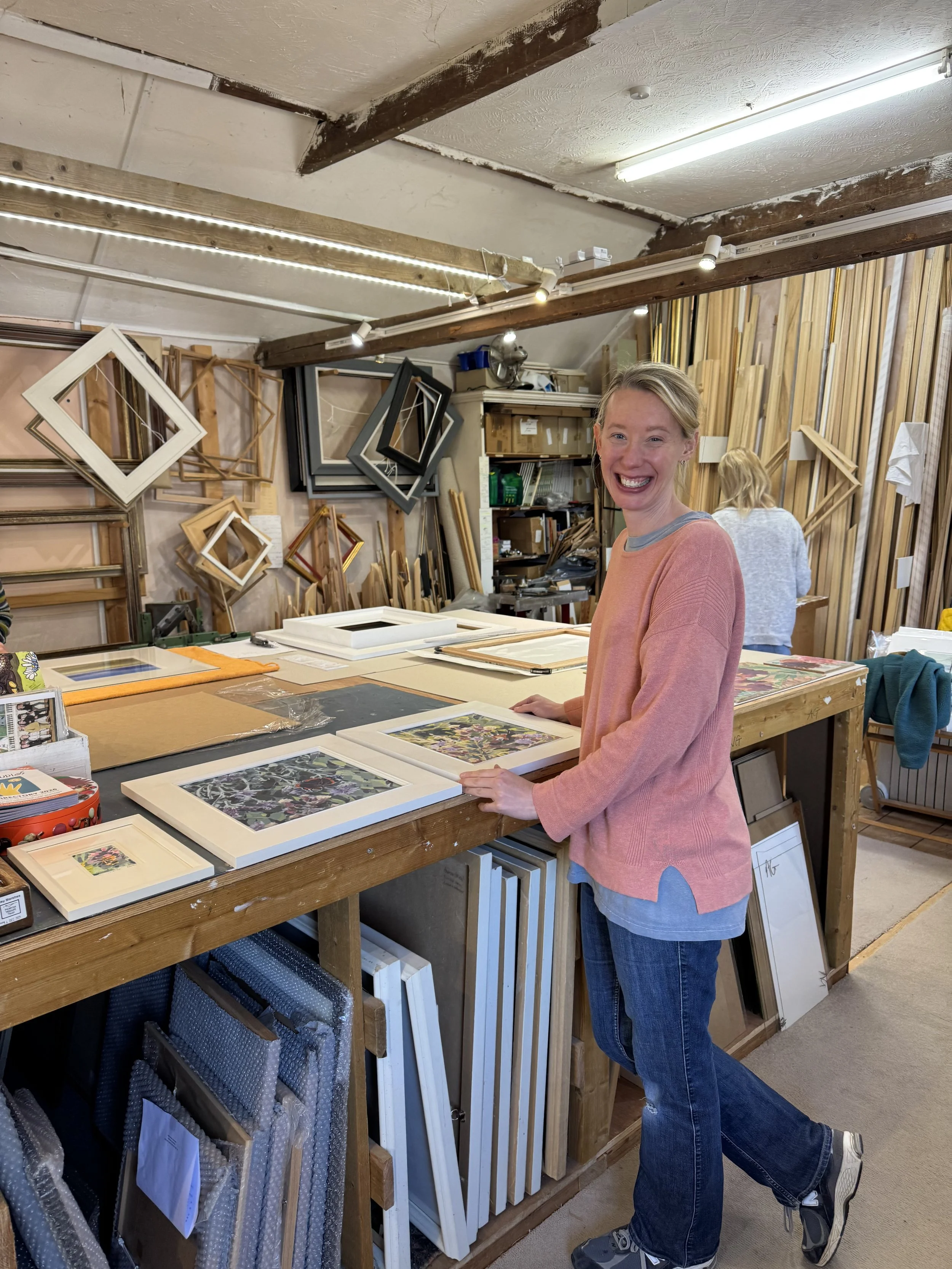
Q: All of your paintings are, a I may say, framed beautifully and you do them all yourself. How did that come to be?

Amie: Well, mum began the framing business and it has developed over the years we do a lot for galleries and artists and I began to frame my own work and have continued to do it. The frame is an extension of the work and I like to paint the frames so that they complement the work.

Q: We agree with you on the framing and you have very kindly framed a few ‘tricky’ ones for us with beautifully painted frames. The George Hammond Steel was the most recent one that comes to mind and it transformed the painting. Where do you see your work going in the future?

Amie: It is hard to say but I have enjoyed the project over the last year and am now involved in a smaller one closer to home which is very enjoyable. I think I will continue to paint and develop my print making and just see what happens.

Q: Thank you for your time Amie and we look forward to showing your work in our forthcoming summer exhibition.

Mark & Mel

Harry Becker’s lithographs and etchings

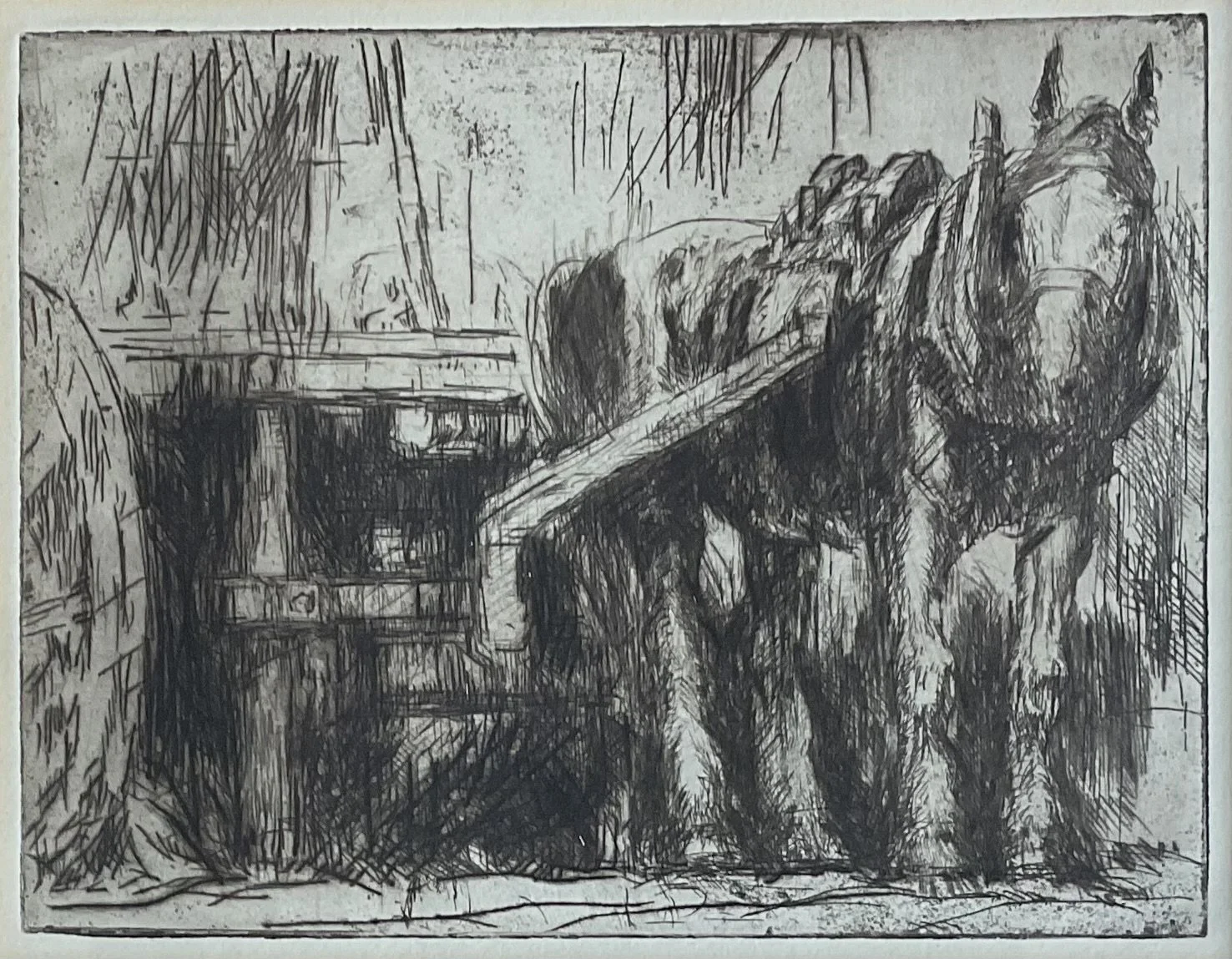
The etching below manages to transmit a feeling of depth and you can almost ‘smell’ the scene.

Harry Becker’s only real financial success during his time in London was as a result of his lithographs. When he held his first solo exhibition at the Baillie Gallery in Notting Hill Gate he devoted it entirely to lithographs and it was so successful that he did so again in 1909 and 1910.

The print expert at that time in the British museum was Campbell Dodgson who was so impressed that he acquired over 50 examples for the museum collection. Indeed, Becker submitted his lithographs to a number of exhibitions in the early 1900’s and for the 1906 Liverpool Autumn exhibition only submitted lithographs and when he sent one to the international exhibition in Milan he won a Bronze prize. Becker was a founding member of the Senefelder Club which was devoted to exhibiting lithographs, showing at Goupil Gallery in London and also Leicester Galleries. Many of these early work show a likeness to his drawings, seemingly done with speed yet managing to still be accurate and delicate.

David Thompson, in one of his essays about Becker said

“ they are often at there most daring in the placing of accents and passages of the densest black against a wild scribble which glitters with movement and light. And the figures, even in some of the earliest, tend towards one revealing Becker characteristic. They are often drawn with that touch of expressive distortion which not only looks very ‘twentieth century’ but feels not particularly English, and certainly not French, but if anything - inasmuch as such qualities are identifiable at all - slightly German: it first became apparent in the 1909 sequence of potato-gathering. “

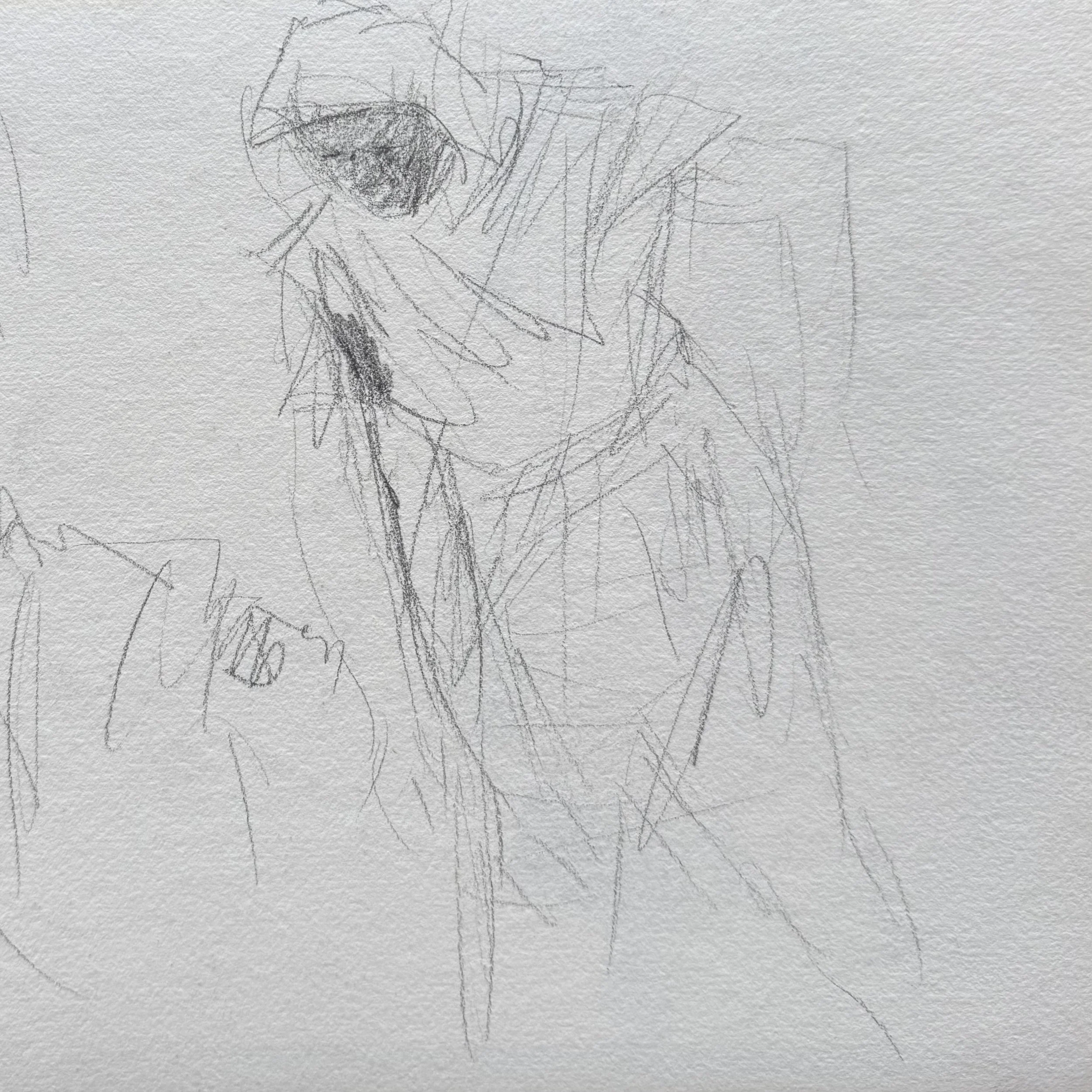
We also currently have in stock a number of drawings from a sketchbook of Becker that has a series of drawings used for the development of these potato gathering lithographs.

Becker’s last big lithograph was made in 1923 when his wife, Georgina, lost her role as art teacher at St Felix School in Southwold. They were short of money again and he hoped to sell it to London transport as a poster but sadly it was rejected, the 10 examples he reputedly made remained unsold and passed to the Loftus family collection after the death of Georgina. We have handled 3 examples of this wonderful image and know of the whereabouts of 9 from the 10 made. We currently have one available which can be seen on our Harry Becker page.

The etchings were never exhibited as widely as the lithographs but their quality meant that they held their own during these years of the ‘etching revival’ . He began making the copper plates in about 1895. He used the dry point technique and made innumerable progess-proofs through which many of these plates were passed, and on which there were anything from small changes to wholesale reworking. Becker also used chalk, pencil and paint to augment the etching and aid the reworking. Several images gained complete figures or additional features from one state to the next and this freewheeling technique is actually rather similar to Degas.

Becker continued to return to certain motifs and images within his thematic material and experimented to the end.

Here at Blondes Fine Art in Hertfordshire we are pleased to be able to offer a number of etchings by Becker that have come from a single owner collection in the North of England and have been owned for a number of decades by the same individual. Do contact us if you would like additional information or take a few moments to look through the Harry Becker page on our website.

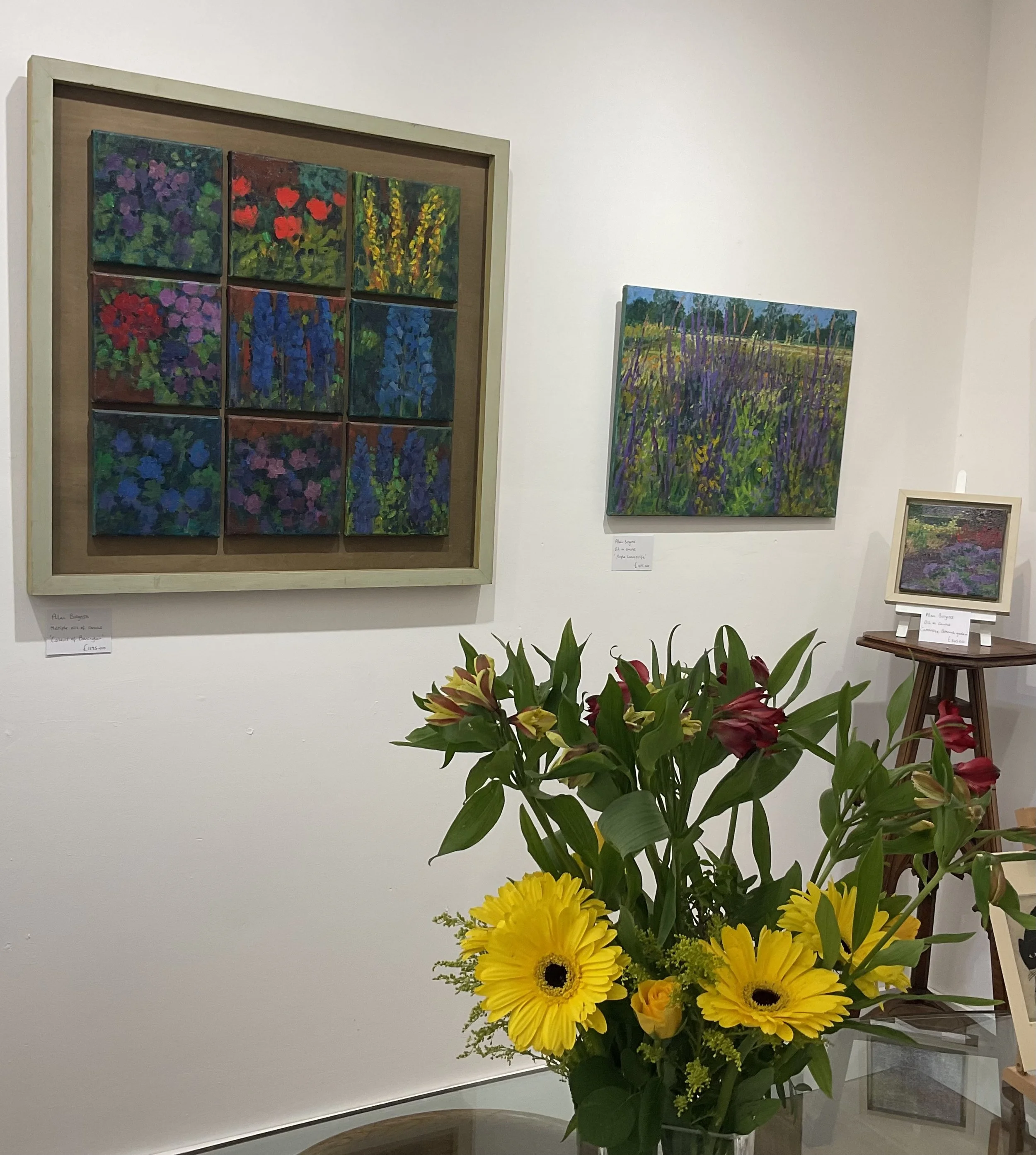
Hertfordshire Gallery to feature work by local artist Alan Burgess in forthcoming Summer exhibition.

The dates of the forthcoming 2026 Summer open weekends at Blondes Fine Art have just been announced and will be Saturday 13th and Sunday 14th June together with the following weekend of 20th and 21st June.

Cambridge Botantical Gardens by Alan Burgess

Based just north of London on the Hertfordshire - Essex borders the gallery holds an eclectic mix of art and has become a destination for buyers of both modern British and contemporary art. This years Summer exhibitions theme is ‘Gardens and Holidays’ and there will be works from a variety of Artists about which more will be revealed in the coming weeks. Today we are delighted to announce that we will be featuring a collection of 10 works by Alan Burgess who was based in Roydon, Essex which is an adjacent village to Widford in Hertfordshire where Blondes Fine Art are located.
Alan Burgess (c. 1937–2025) was a British landscape painter, art teacher, and environmental advocate whose life and work were deeply rooted in the natural world—particularly the trees, flowers and countryside.

Life and career

Alan Burgess was born in West Mersea, Essex, and trained at Colchester School of Art, where he won a landscape painting prize early in his development.
He gained early recognition in 1957 when he was selected for the Young Contemporaries exhibition in London, a key showcase for emerging British artists. This exhibition had many other young artists included and one such artist was Bridget Riley who went on become one of our best known and highly regarded exponents of abstraction. Alan was very much part of this early abstract movement and a member of the Free painters group where he got to know Frank Avery Wilson, Leslie Marr, Roderic Barrett, Roy Turner Durrant, Chris Holden, Aubrey Williams and Denis Bowen to name just a few. He would later abandon abstraction but we do have some of his early work from this period available to purchase in our Summer show.

Alongside his own practice, he built a long and influential teaching career, spending nearly 30 years as a lecturer in art and design.

Alan’s work evolved over time. He began, as mentioned above, with abstract painting but gradually moved toward landscape and nature-based subjects, especially after settling in Roydon, Essex in the late 1960s. His paintings—across oil, acrylic, and watercolour—focused on capturing the vitality and presence of the natural environment. Trees became a central motif, often treated almost as portraits, reflecting both their physical form and symbolic weight.

In later years, he developed an interest in “multiples”—series of works exploring the same subject from different viewpoints or moments, adding a reflective, almost meditative dimension to his practice. He also produced a series of highly colourful images of flower gardens which will also be featured in the coming Blondes Fine Art exhibition.
Alan’s Studio

Major works

His most ambitious and widely recognised project was “The 50 Great British Trees”, a series of 50 oil paintings depicting notable trees selected by the Tree Council to mark Queen Elizabeth II’s Golden Jubilee.
He travelled across the UK to paint each tree on location, and the series was exhibited at venues including the National Arboretum at Westonbirt and a number of other high profile galleries.

Environmental work and philosophy

Alan Burgess was more than a painter of nature—he was actively involved in protecting it. He helped lead local campaigns to preserve green belt land, organised tree planting, and contributed to restoring historic landscapes such as ancient pathways. He was a dedicated painter who would pack his art materials wherever he went, which included his summer holidays, and he has left a legacy of work that covers paintings of the Lake District and Suffolk - where he exhibited at The Pheonix Gallery Lavenham together with work from a number of European destinations, particularly Italy.

His artistic practice, environmental activism, and interest in meditation were closely connected, reflecting a holistic view of art as a way of engaging with the world.

Alan sadly died in late October 2025 at the age of 88 after a period of ill health.
He is remembered as a quiet but deeply influential figure—a painter devoted to the British landscape, a committed teacher, and a passionate advocate for the natural environment.

Blondes Fine Art are looking forward to helping remember Alan and his work in the June exhibition.


Harry Becker’s bus horse paintings

By the late 1800’s London had over 2,000 horse buses and 25,000 horses, with stables and a small army of grooms, blacksmiths and saddlers but the last London horse bus service in London was on 4 August 1914, the day Britain declared war on Germany and became embroiled in the First World War. The horses were immediately sent to the front, most never to return.

Harry Becker has been ‘claimed’ as one of their own by the county of Suffolk thanks to the Loftus family who have championed his work for some three generations.

Becker was actually born to German parents in Colchester, Essex, trained in Antwerp before enrolling in the Bushey School of art in Hertfordshire, from where he moved to Paris to train with Carolus Duran. In 1894 he set up his art practice in West London and remained there until 1912 when he finally moved to Suffolk.

Harry Becker became one of the London set of artist noted for his rural and agricultural themed work, a master print maker he was friends with Frank Brangwyn, Nevinson and Augustus John and became a founder member of the Senefelder Club, established to promote lithography.

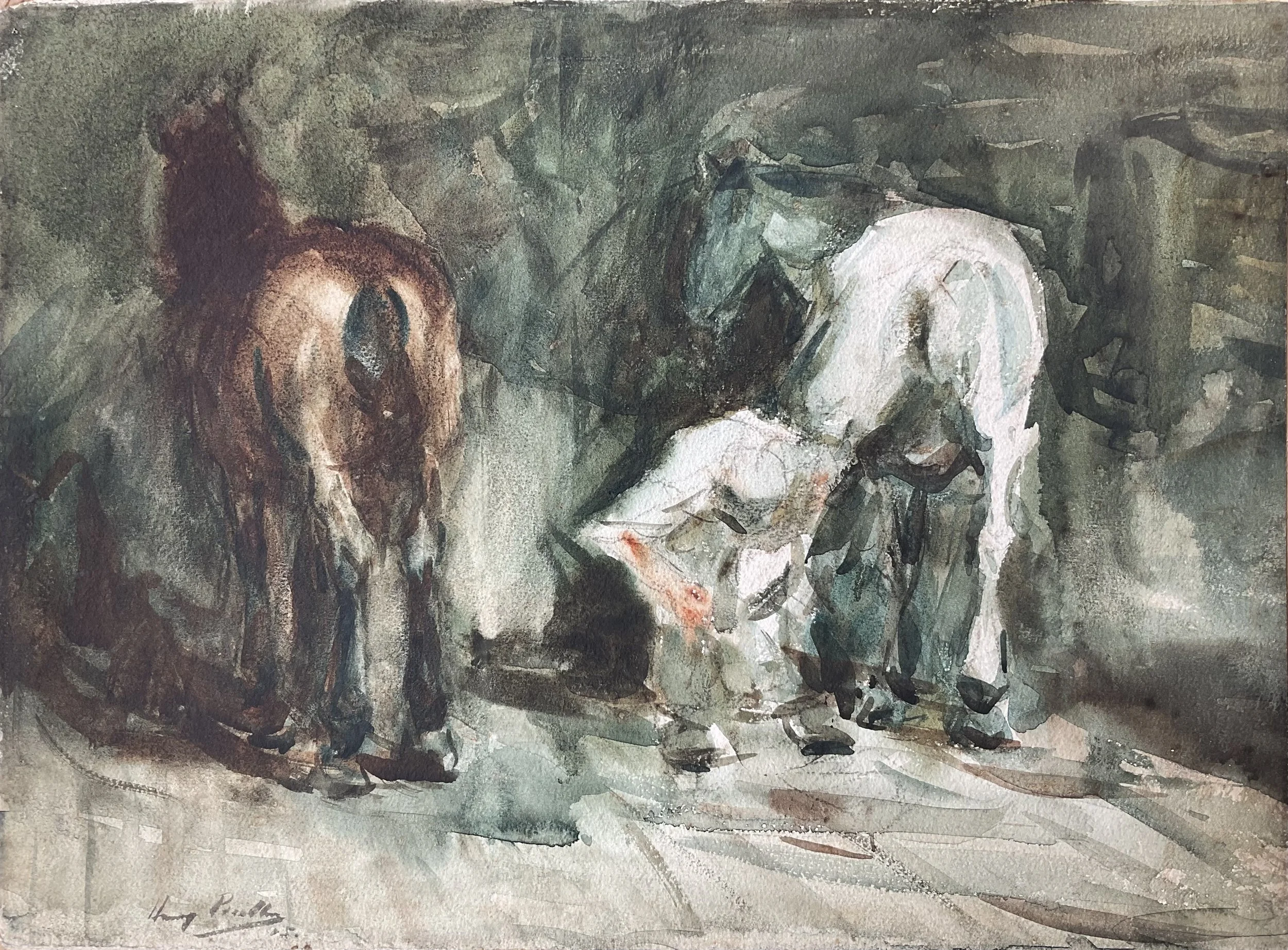
However, there were four defining incidents that eventually made him decide to move to Suffolk. Firstly, his young son died in 1909, followed by his father in 1910 and then the collapse of a commission with Selfridges store and finally the loss of a high profile court case. But, what he did leave behind for us from that decade in London are a series of paintings of the stables, the working bus horses and those farriers and stable lads that worked there ensuring these animals were in as good as condition as possible.

Very recently I was chatting about Becker to a lady who had lived in Suffolk all of her life. She was knowledgeable about Becker and his work but when I showed her a painting of one of his London bus horses she questioned if I was correct, having no idea that he had spent time there before living in Suffolk. This prompted me to write this short piece about this series of work.

We hold a large watercolour from this series in our own personal collection together with a wonderful etching he produced from the same period of one of the horses stood in the stables. Becker lived close to one of the stables in London and seems to have been driven to record the final days of the use of horses in London just as he was later driven to record the last days of the working horses in Suffolk just prior to the introduction of motorised equipment.

The artist lived near to West Kensington Station which was also close to one of the bus horses stables which housed the working horses that he has become most famous for depicting. It is also interesting to note at this point that the other great painter of heavy horses was Lucy Kemp-Welch who was a contemporary of Becker’s at the Bushey School of Art in the 1990’s. They share an ability to depict these animals in a way that no one else has ever managed.

The Bus Horse series was a small series of work but it showed his free style and use of minimal palette to produce the most evocative images. These works feature a pair of horses, a chestnut and a grey, and are shown both in their stalls feeding or being checked by the farrier which was a daily event to ensure their feet had not been damaged during the days work. Becker seems to have been very pleased with the series and turned one image into an etching - the one we have in our collection - and titled it ‘The last London bus horse’ . He also actually produced a few proofs in red, which I have never seen, giving one copy to the art expert Campbell Dodgson according to the historian and Becker expert David Thompson.

The bus horse series was small and I am only personally aware of 6 works but would love to know of any others in existence, so do please contact us if you have any in your collection.

Lucy Kemp-Welch ………The story of her ’Mare and Foal’ paintings, and of love and loss.

We currently have 26 works for sale. Do. check out our dedicated Lucy Kemp Welch page

Sometimes, when a new artwork comes into the gallery I feel drawn to indulge my passion and conduct a little research based on the known history of the piece. This happened yesterday when a lovely couple travelled down from the midlands to deliver a Lucy Kemp Welch watercolour to us here in Hertfordshire and told us what they knew about the work.

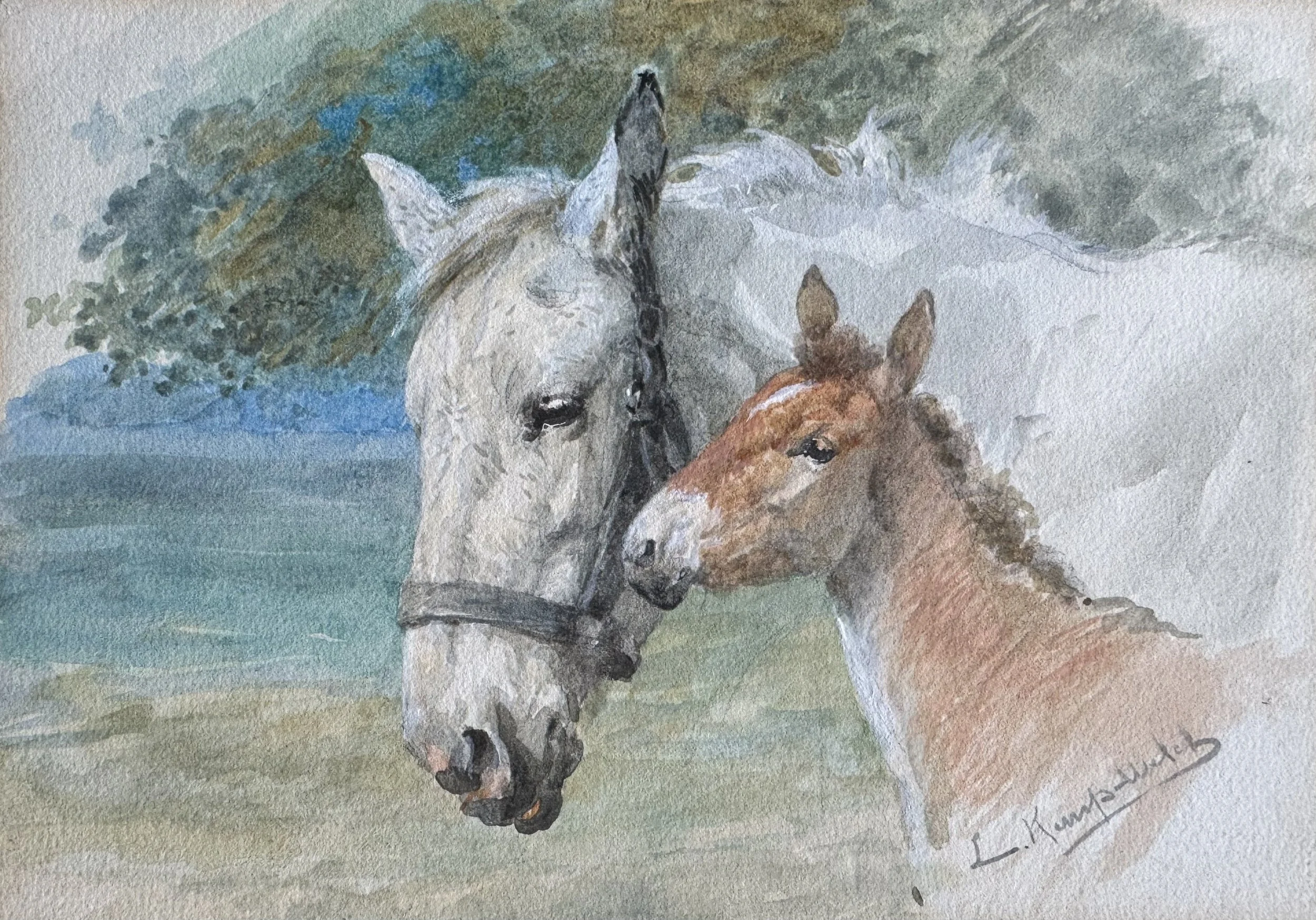
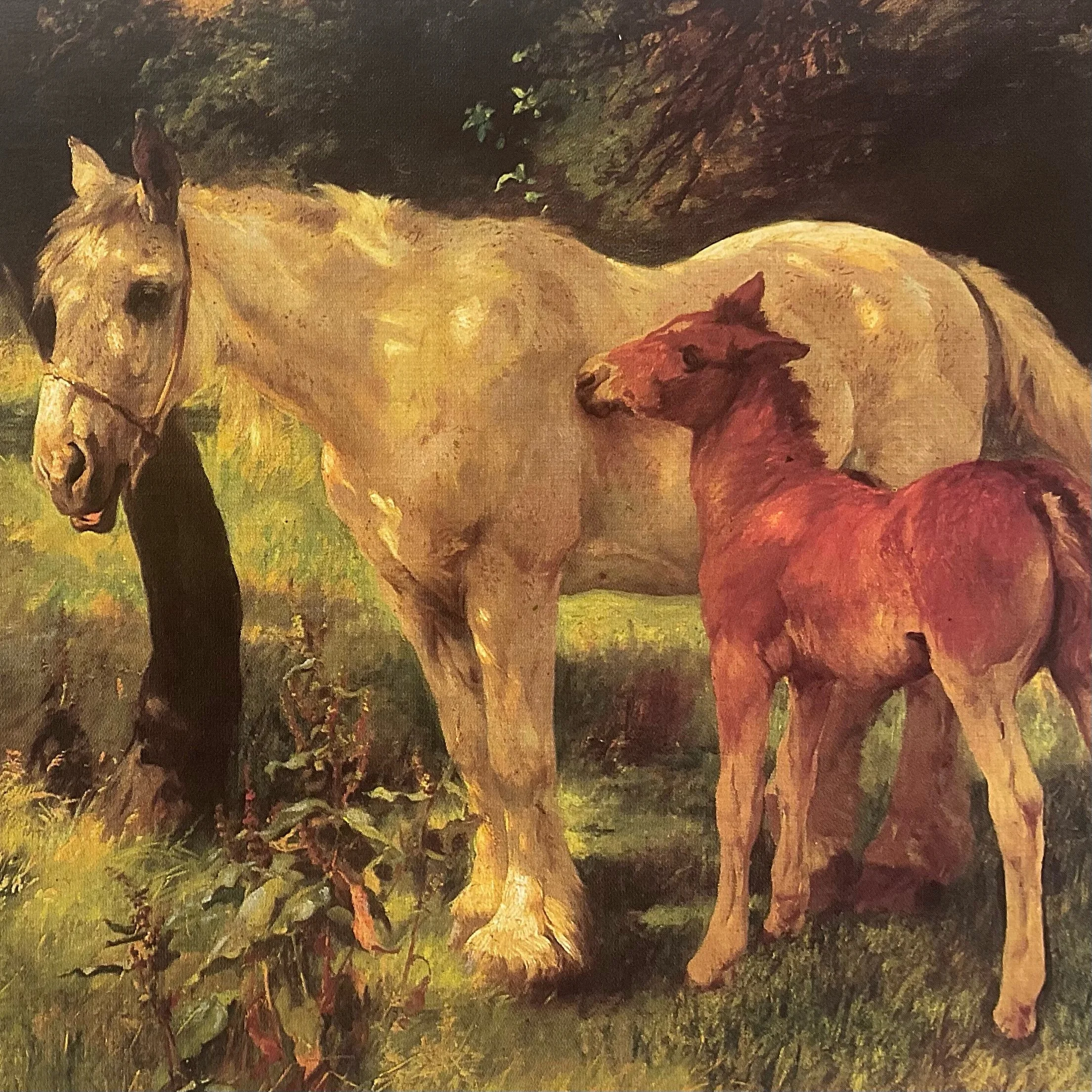
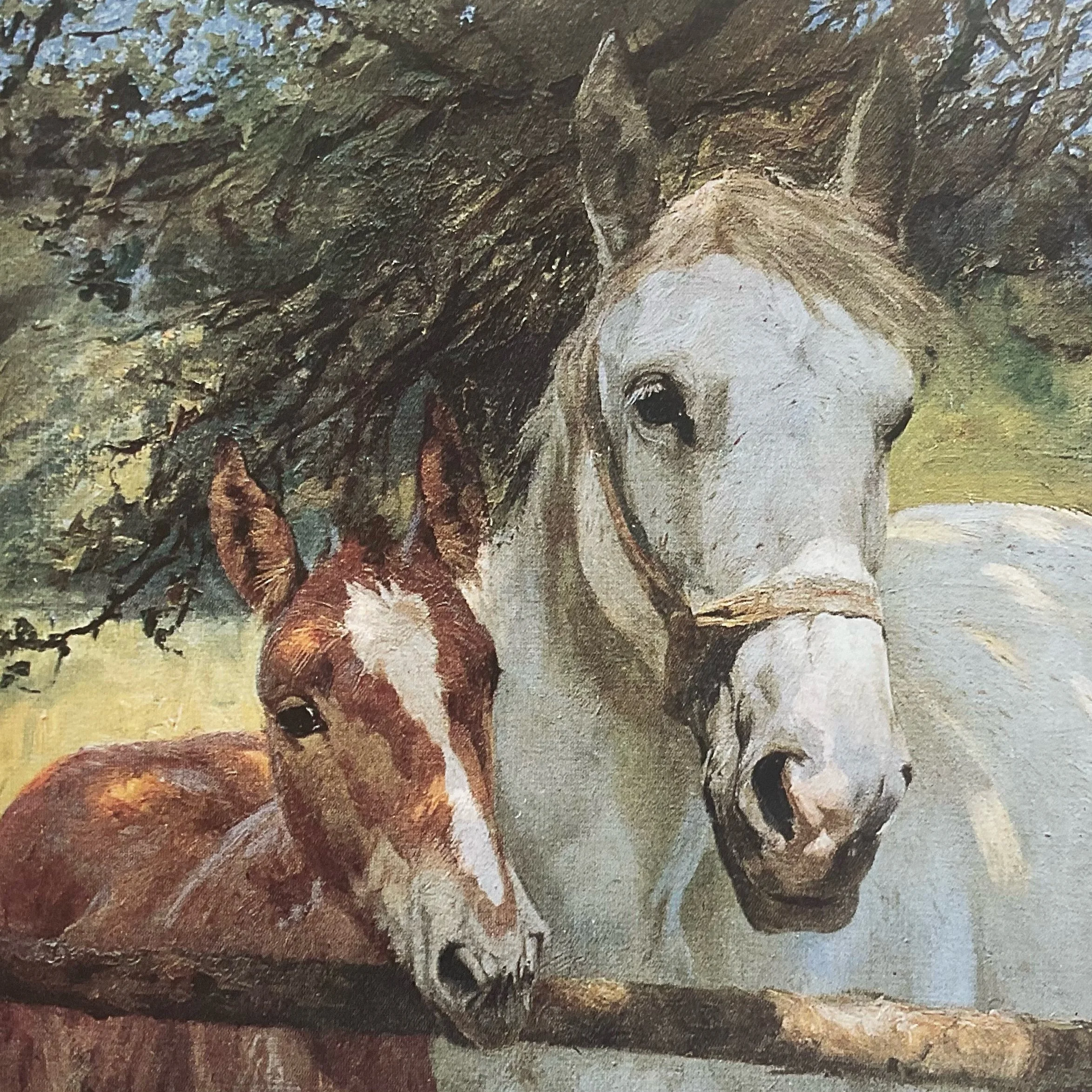
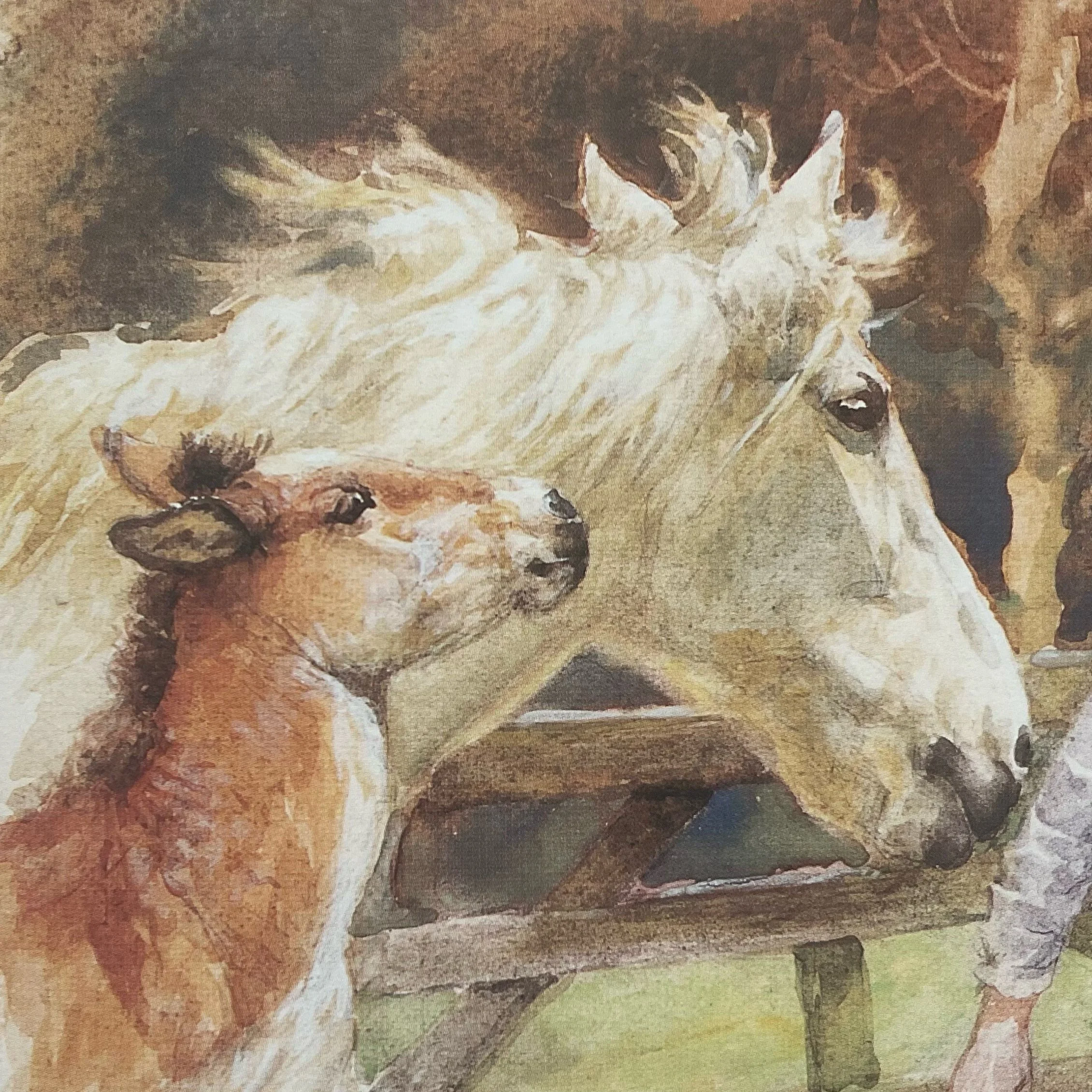
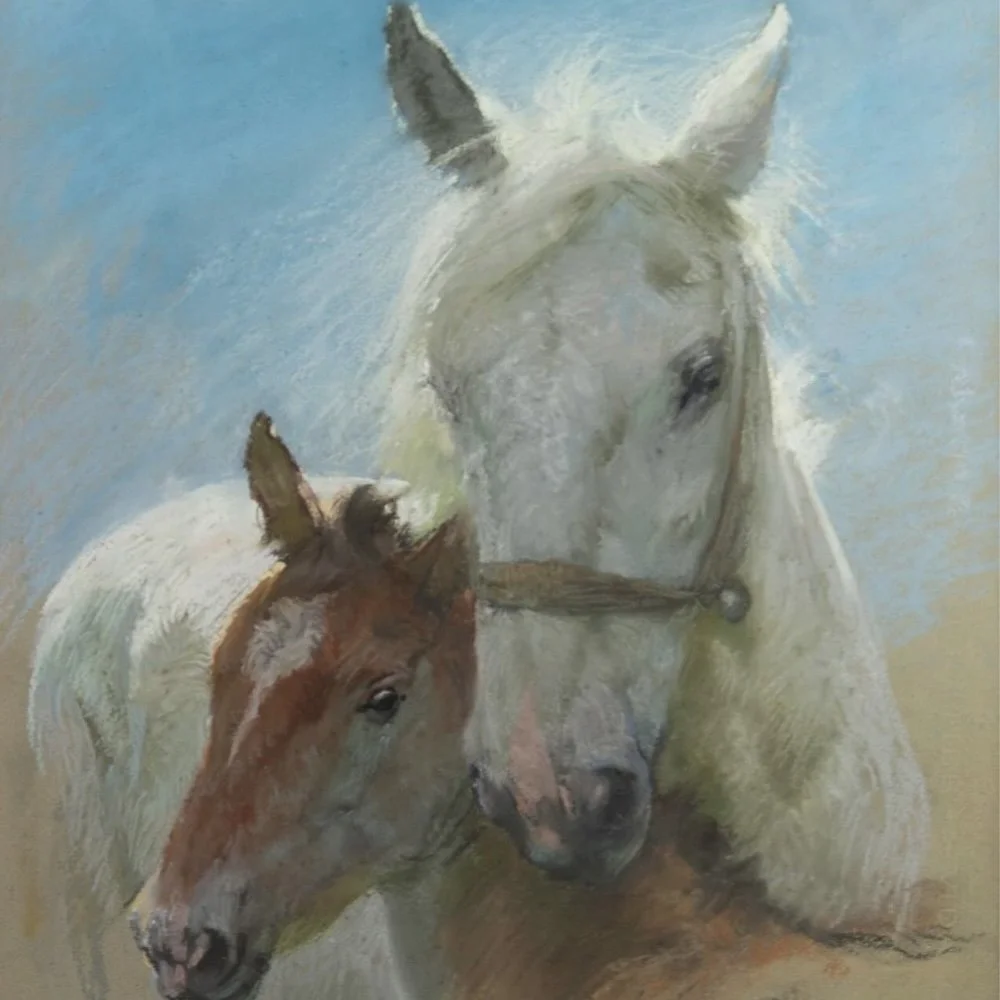
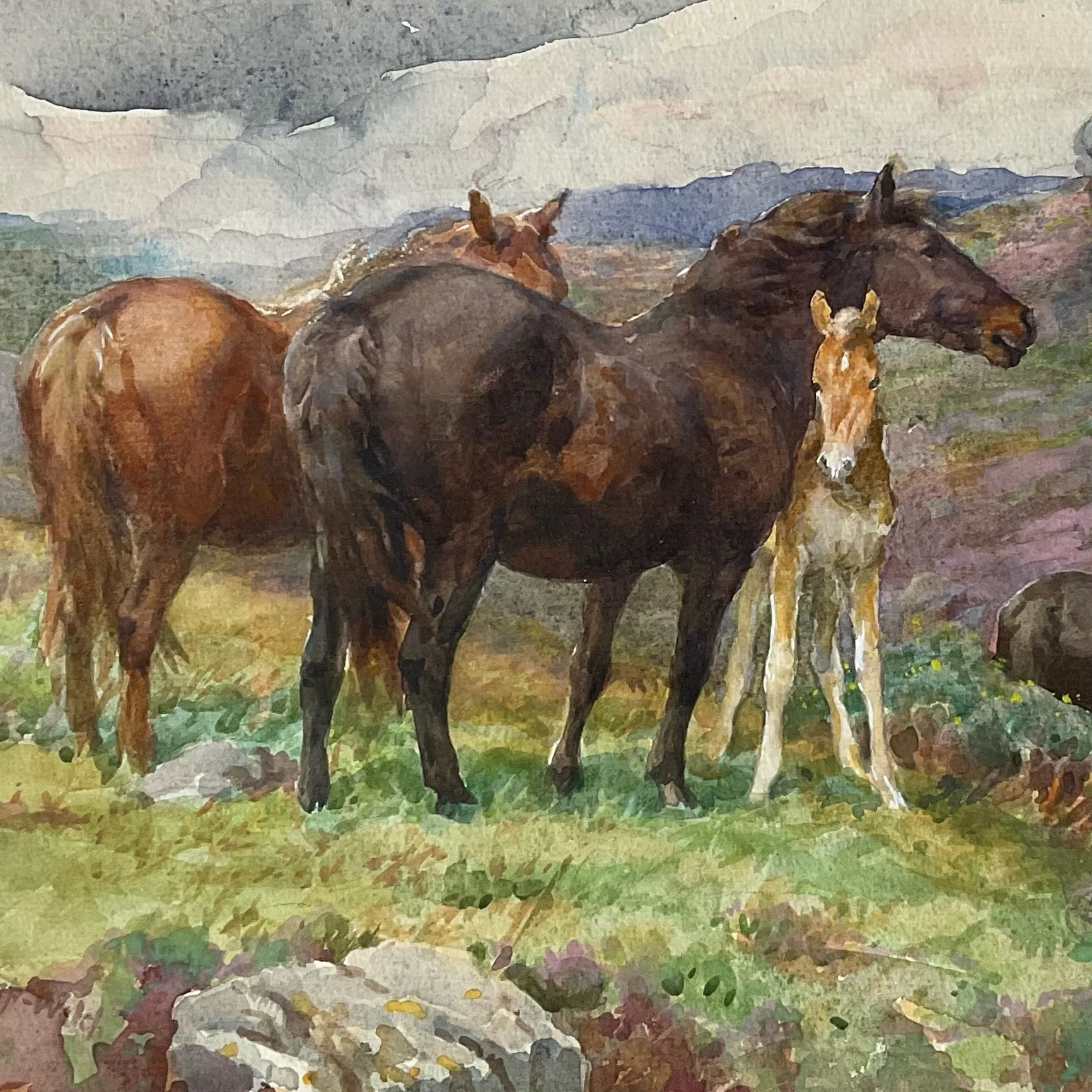
New work ‘Mare & Foal in the orchard ‘ Circa 1904/5

The painting is shown above and is a delightful watercolour which has clearly been well loved and kept out of direct sunlight as it remains in perfectly original, untouched condition. We know that it was in the personal collection of the sellers late mother and that the family had lived in St Albans before dispersing across the country. My ears pricked up at this point and I explained that, over the years, we had acquired many of Lucy’s works form collections in the Hertfordhire, Beds and Bucks area, due to Lucy living in Bushey for most of her life. After a little more discussion and a glance at the original London gallery label still affixed to the back of the painting I decided to do some more research.

I decided to remove the painting from the frame as it will require a new mount due to the fact that the original acidic mount will need replacing with a conservation grade one to prevent any long term damage to the artwork. Often there is a title to be found on the back of an artwork or even another sketch but not on this occasion, just the framers measurements and scribbled on the back of the mount board. So, I decided to do a little research on the label for A Vokins & sons of Holborn London who were a well known and highly regarded art dealership and framers and after a little digging this put a date of circa 1915 into the equation. This is consistent with the image and the back of the frame which retains its original wooden backboard. It also fits into a sad period in Lucy’s life when she painted a series of works all depicting this grey mare and foal. For those who are interested here are the details of how she came to paint these works which all date roughly to a 3 year period between 1904 and 1907.

The story begins a couple of years earlier when two new American students came to Herkomer’s School of Art in Bushey , they had been at the Art Students League in New York and were as keen on socialising in London as doing much else, often arriving back in Bushey still wearing the evening attire from the previous night. One of these young men was called Frank Richmond Kimborough , known as Kim, and he became a close friend of Lucy and they would often be seen out together riding and in London at the R.A. Events . Kim also introduced Lucy Kemp Welch to a young Australian called Arthur Potts who would sit for Lucy as a model and became a great friend to the artist and was affectionately known as Traddles.

Kim and Lucy had grown increasingly close but on Christmas Eve 1902 Kim died of pneumonia. She wrote about the days in her diary and the last entry for 1902 simply ends with ‘ Goodbye , My friend’.

Over the next year Lucy seems to have confided in Traddles and although he was about 10 years her junior she seems to have developed a deep maternal love for him as she painted him as a model in a number of her Royal Academy works. She also painted a portrait of Traddles which was a rare thing for her to do and shows a degree of fondness for him. Sadly, in 1904 he became so seriously ill with pneumonia he was admitted to Bushey Heath hospital where she visited him sometimes three times a day. She devoted herself to his care and looked after him in the way she had not been able to do for Kim. She would not leave Bushey and the orchard at her home became the only place she painted and the subject was a grey mare which she had borrowed from the local brewery Benskins in Watford. The paintings she produced at this time were some of her best and intimate images of mare and foal and include ‘In the Orchard’- Sunlight through the leaves and ‘What comes’, and it appears her emotions were being drawn to the mother - child bond and articulated in her artwork.

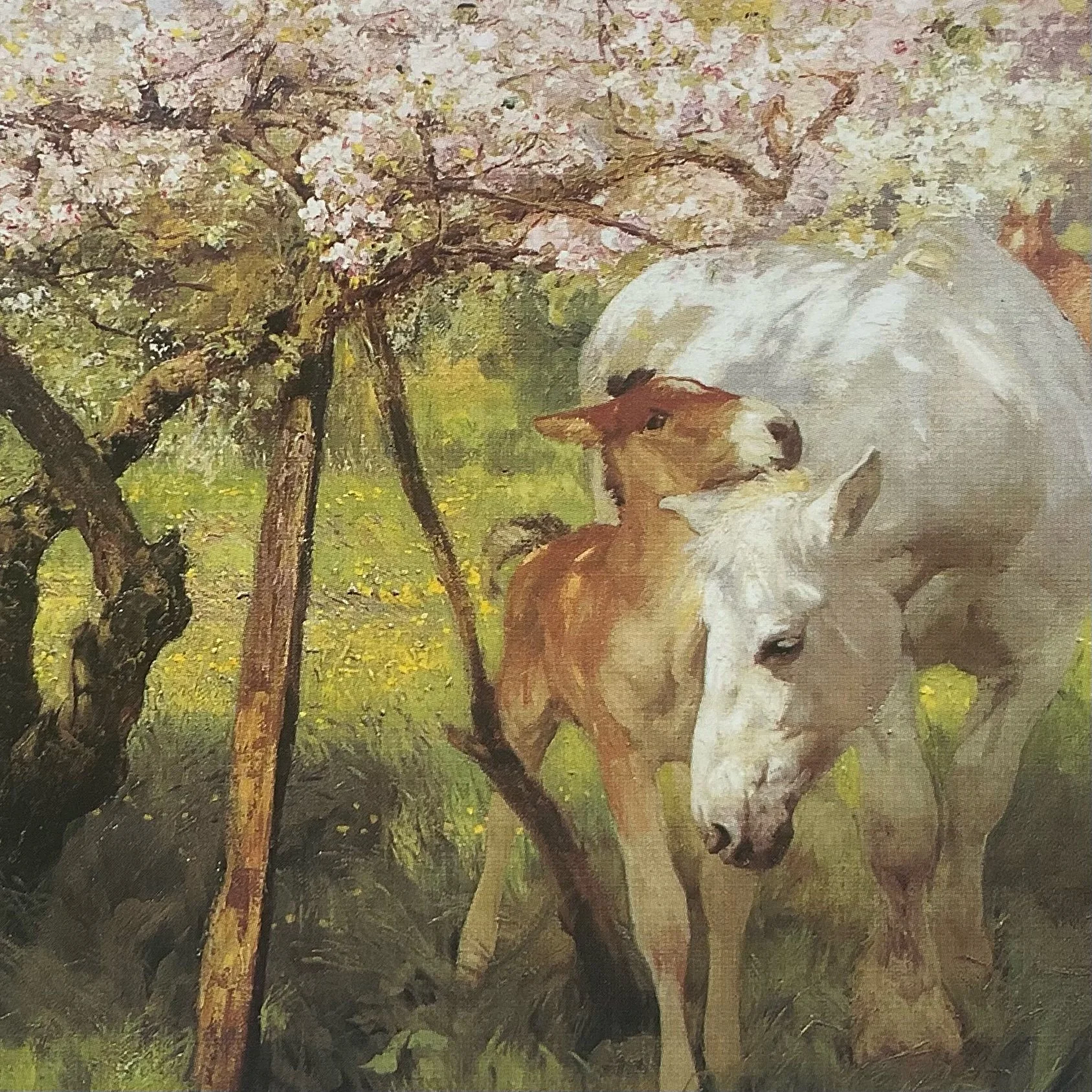
It was 12 months before she began to paint again following Traddles death and it was to the orchard and to the grey mare and foal theme that she returned. She painting ‘Song without words’- illustrated below - and ‘Morning of the year’ which had alternate titles of ‘Spring Idyll’ and ‘Morning of the year’ possibly seeing them as metaphors for rebirth . It seems she worked and reworked all of these mare and foal exhibition oils up until 1907 when she appears to come to terms with the death of her two friends .

We know that the theme of mare and foal was one that she started drawing in the New Forest in the mid 1890’s and indeed Lucy did return to the mare and foal theme from time to time after the war but they tend to be commission pieces that do not have the same intimacy.


These mare and foal images are, together with her working horse paintings, perhaps the most iconic pieces produced by Lucy Kemp Welch and when you understand the significance they had for her they do reflect another rather more emotional side to the artist. They represent a sad time in her life and the caring maternal love she felt for Traddles and perhaps a deeper and different sadness she felt for the loss of Kim just a few years earlier.

The work we acquired yesterday is a working watercolour which would have formed part of her progress through this theme which eventually resulted in the RA exhibition pieces. We do know that she used pencil drawings followed by watercolour and oil sketches to hone the composition and there are certainly elements of ‘Song without words’ and ‘Sunlight through leaves’ that allows us to accurately date this work to the years 1904/5.

We hope you enjoy these pieces as much as we do? This work is now off to the framers to be ‘set up’ in a new conservation mount and glazed with Art glass to protect it for years to come.

Mark & Mel

Blondes Fine Art - Hertfordshire Gallery
‘Britain can make it’ - Robert Buhler painting 1946

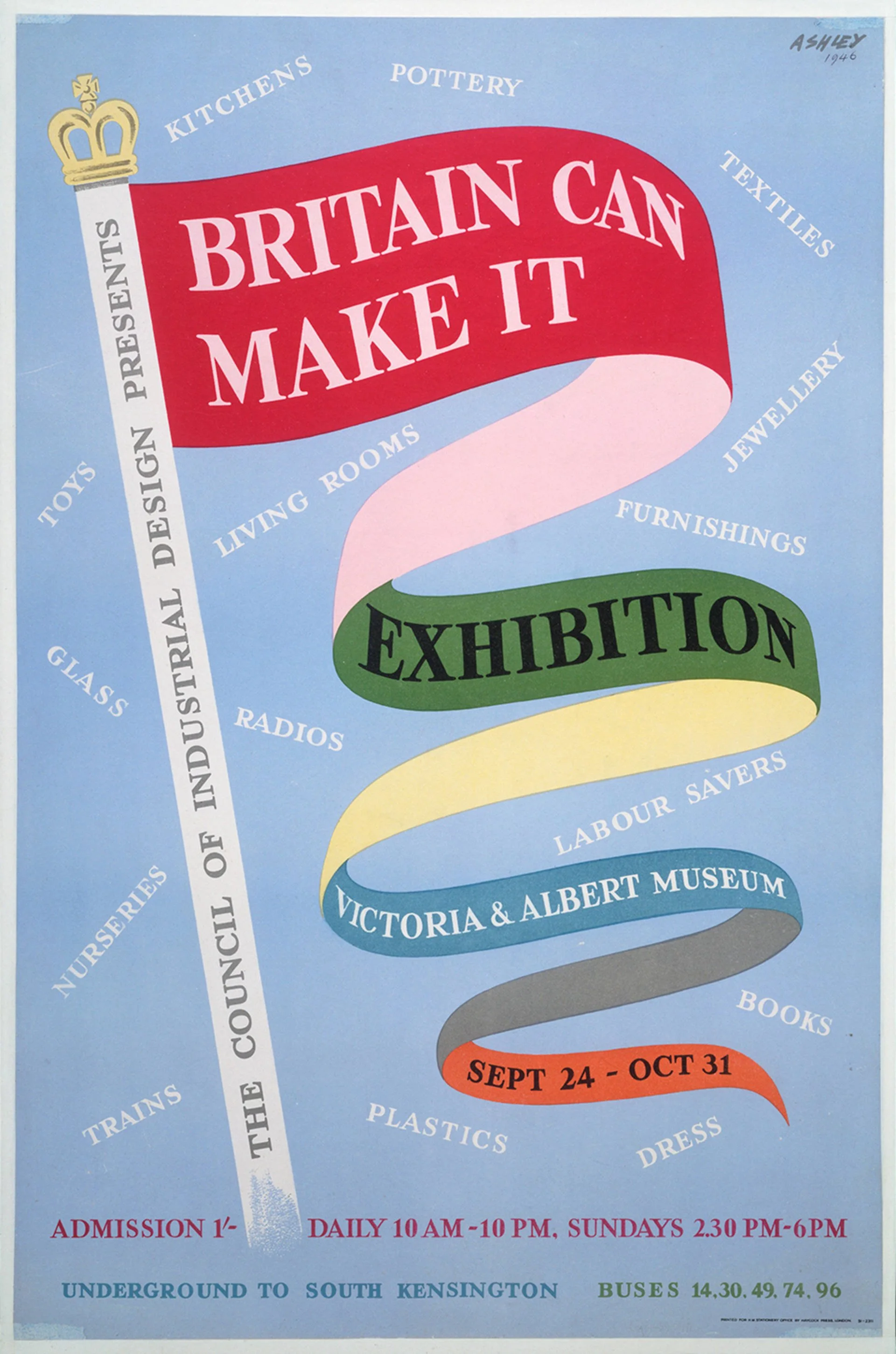
During 1946 post war Britain was getting back on its feet and the V&A held a highly acclaimed and hugely well attended exhibition titled ‘Britain can make it’ which featured innovative modern design from the best of British designers and makers. The exhibition was opened by the King and Queen and had queues around the building with the public wanting to see what the future could be bringing .

The aim of the Britain Can Make It exhibition was both to bolster Britain's manufacturing industry, and, to promote a 'design consciousness' in the British public. The severe debt left behind by the Second World War, as well as continued rationing – which wouldn't ease until 1952 – meant that income generated through trade, especially international trade, was crucial to recover Britain's crippled economy. The government decided that well-designed consumer goods for the domestic and export markets would represent British industry as modern, forward-thinking and high-quality. The Council of Industrial Design was founded to "promote by all practicable means the improvement of design in the products of British industry". V&A website

During 1946 Robert Buhler was at his very best and found post war London a place where he could record the spirit of the people and city as it began to return to a more normal state. He painted a number of highly regarded works that were purchased for the country to provide a historic record of this important time in our history. These are still held by RA collection , Tate Britain and London Museum collections but a few are still in private collections .

Robert Buhler had taken to painting scenes from an elevated position allowing him to almost form a photographic image in paint of the streets and people of London during 1946. He often used a similar palette and in this work depicting the queues outside the V&A museum with Londoners waiting to enter the exhibition and he uses an identical palette to the other 1946 work we have available depicting Sloane Square.

As we can see from the painting Robert Buhler has a skill in taking an everyday scene and making it feel some how iconic. The 1946 streets outside the V&A were adorned with the Union Jack and flags of the UK and must have added, not only the colour and sense of patriotism but feeling of the country moving forward and optimism . Photos in black and white from the time show similar groups queuing for the exhibition but the coullour that Robert Buhler brings to his image adds much more feeling and depth .

This painting is available to purchase .

Dorothy Mead - Provenance is everything !

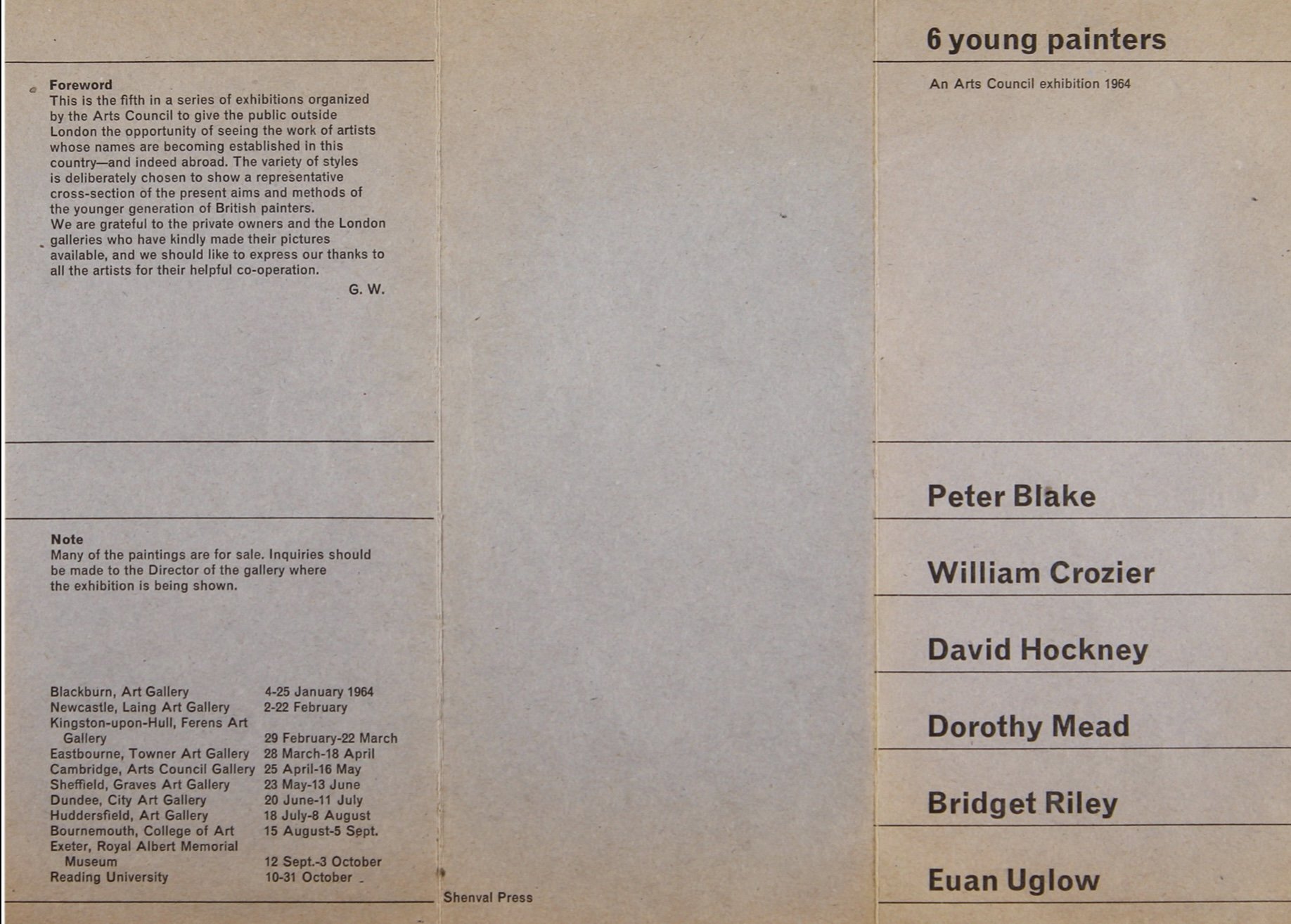
When it comes to Art the Provence of a particular piece really is everything. It is so important that the authenticity can be proved and documented, so we are delighted that the 2 works by Dorothy Mead that we have just added to the website can be traced directly back to a key exhibition in 1964 .

In 1964 The Arts Council organised a touring exhibition of 6 young artists so that the public outside London could become more familiar with key artists who were making a name for themselves both in the capital and worldwide . So while I am sure many of you will be aware of Peter Blake, David Hockney, Bridget Riley, William Crozier and Euan Uglow you may not be as familiar with Dorothy Mead . Why ? Well sadly she died in her 40’s and like a number of female artists sank into obscurity while her young contemporaries rose to be some of the greats of their time and became household names .

So who was Dorothy Mead ?

Dorothy Mead was a loyal student to Bomberg and championed his work and methods even when the wider British art community was staunchly against Bomberg’s teaching methods and philosophy, leading to Mead being asked to leave the Slade before completing her studies there. It is difficult to know why the art-world failed to appreciate Bomberg’s works despite his students and friends being able to recognise his skills: perhaps they found his teaching style too unorthodox or were threatened by his approach and philosophy. Whatever the reasoning, the establishment was against Bomberg and the Borough Group as a result, which arguably hindered the flourishing of the group-members’ careers as galleries refused to exhibit their work. 

Also it seems Mead’s gender had a great deal to do with her career not finding the success it had the potential to. Female artists have had the odds stacked against them for as long as society itself has been patriarchal. Until recently, non-male artists were rarely commissioned to make work, and ratio of male to female artists in galleries always shows there are more male artists being exhibited, sold and critiqued. The men who were influenced by Bomberg and were closely aligned to him, such as Holden, still found more success than their female counterparts. And the men who were influenced by Bomberg and distanced themselves from his philosophy, such as Auerbach, found even greater success. Considering that Auerbach was three years younger than Mead, they were certainly contemporaries and so the comparison between their works is relevant, highlighting the distinct differences between their careers. If Mead had distanced herself from Bomberg and continued to study at the Slade, as Auerbach did, she might have been a considerably more well-known and successful artist; and yet, maybe her allegiance to Bomberg and her respect for his teachings made her the artist she became. 

Indeed it is interesting to note that Mead most often just used her initial ‘D’ in any advertising so as to hide her gender.

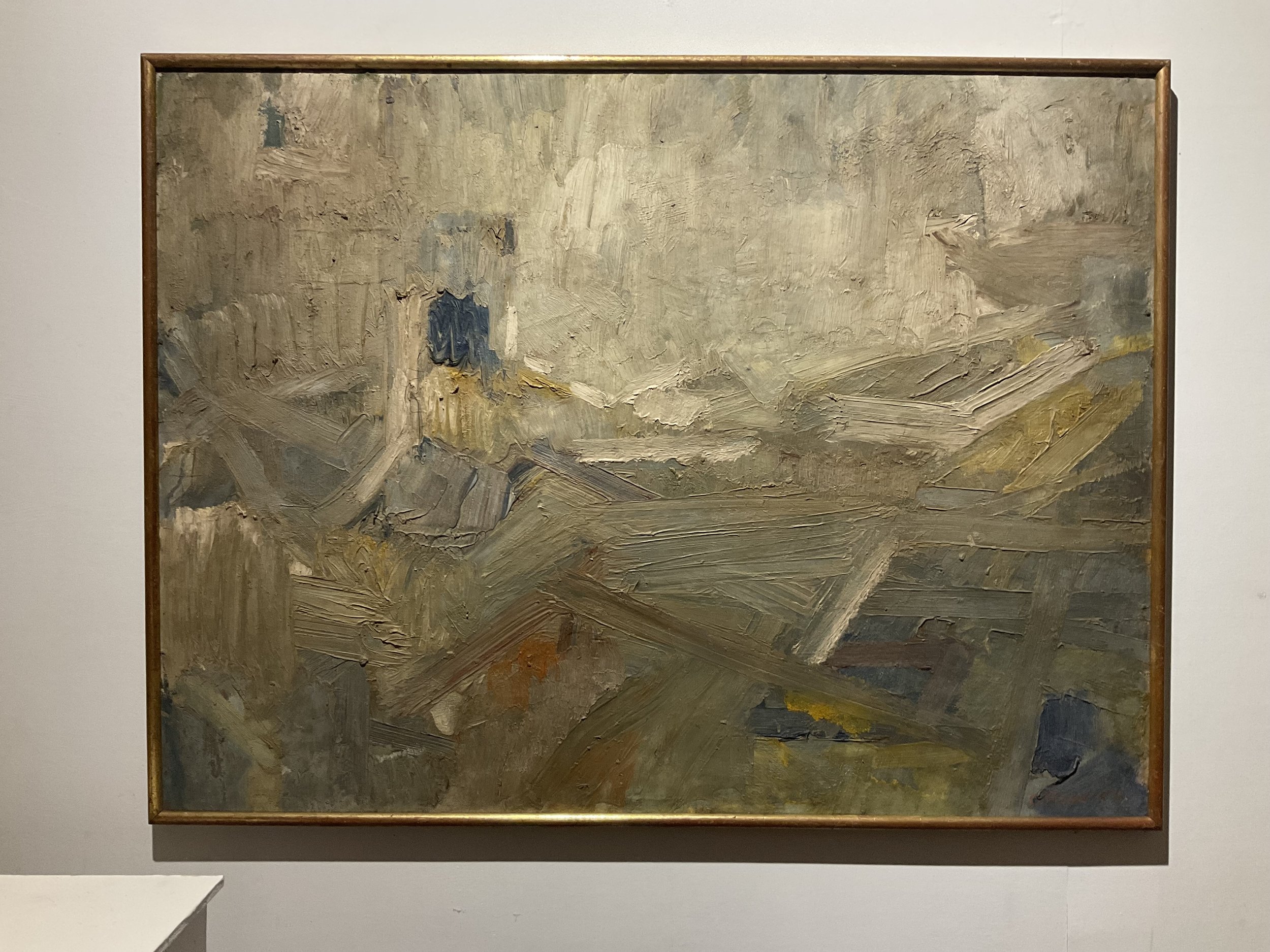
The image above is the list of works that were shown in the 1964 travelling exhibition and we are delighted to be able to offer 2 of these here at Blondes Fine Art in Hertfordshire , in fact we like them so much they currently hang in our home and it has to be said that they look so much better in real life than in the images attached at the end of this article. They really are ones to come a view first hand.

Both are fabulous examples of her work and were retained by the artists family after her death .

N0. 17 ‘View of river from Greenwich’ 1958 comes from the exact period when she was expelled from The Slade for refusing to take the module about perspective

In 1958 Mead won the Slade’s prize for Figure Painting and then the Steer Prize for Landscape Painting. Mead became the first woman president of the Slade’s student exhibiting society, the Young Contemporaries. The next year Mead became at loggerheads with the principle William Coldstream as she refused to take the Slade’s course on perspective, likely thinking it would damage her work and go against the teachings of Bomberg she said “perspective has no place in art” and wrote a thesis on that aim, but it was refused, so she was asked to leave the Slade. In 1960 a similar argument broke out at the Royal College of Art between Robin Darwin and student David Hockney over the latter’s refusal to complete the general studies course.

No. 21 ‘Still life- Flowers’ 1962

This piece is an oil on canvas that was a gift from the artist to her mother and bears a hand written label stating the fact , verso.

These 2 oils by Dorothy Mead retain their original gold exhibition frames and are ready to hang .

Do contact us for additional information or to arrange a viewing .

Jo Brocklehurst - Trailblazer Exhibition in Amsterdam

From October to December 2023 the Illustration Embassy presents the exhibition Trailblazers: 20th century illustrators and activism at the Meterhuis at the Westergas in Amsterdam. 

Jo Brocklehurst exhibited her work in Amsterdam in 1979,81 & 84 so its fitting that she is represented in this exhibition . Jo Brocklehurst is once again becoming a highly collected artist and here at Blondes FIne Art in Hertfordshire we will be running a parallel selling exhibition of her iconic work during the same period as the Trailblazers exhibition in Amsterdam.

The exhibition focuses on an exceptional generation of illustrators of the 20th century that were frustrated by the state of the world and engaged themselves​ around specific issues of their time (all of which are still relevant today). From racial discrimination, political memory, human and animal rights, economic rights, to gender, social and thinking norms, these illustrators cared and made images to make others care. For each illustrator, we focus on the strength of their unconventional gaze and the way they shaped our vision of society.

The impetus for this exhibition lies in research conducted by professor Emilie Sitzia and her master’s students at the University of Amsterdam and the University of Maastricht. They delved into a group of 13 influential illustrators and contemporaries of Fiep Westendorp; ranging from Pippi Longstocking’s illustrator Ingrid Vang Nyman, avant-gardist Tove Jansson, to Dadaist Hannah Höch. The researchers placed the significance and social impact of these illustrators in the international context of their time in a new way.

The exhibition Trailblazers, and its accompanying publication demonstrate how the medium of illustration challenged social and aesthetic norms of the time and had a lasting impact on society.

Joanna Carrington

Joanna Carrington is sadly a lesser known woman artist of the Modern British period, but here at Blondes Fine Art we love to champion female artists both contemporary and twentieth century.

Who is Joanna Carrington ?

Carrington comes with exemplary credentials and really should be an artist who is included in any collection. Perhaps her destiny was written from the day she was born in Hampstead in 1931 as her Aunt was Dora Carrington - yes that Dora Carrington of Bloomsbury group fame ! She went on to study under Cedric Morris at Benton End in Suffolk before travelling to Paris to train in Leger’s studio before returning to London where she attended the Central School of Art where bing taught by William Roberts, Passmore, Paolozzi and Turnbull to name a few. Joanna found Hugh McKinnon a generous tutor who introduced her to the artists who would influence her work for the rest of her career , particularly Bonnard and Gaugin .

What did she paint?

She loved these French artists with a passion and spent much of her life living in Brittney, Normandy and central France painting landscapes and still life work following the example of those post-impressionists and modernists who rejected classical perspective and local colour, and searched for new ways to represent the natural world while still retaining the convention of a window space. It is amazing that she she didn’t have a regular Gallery to represent her until 1987 when at the age of 56 Sue Rankin at the Fulham Road Gallery offered her an exhibition . She had exhibitions with The Portal Gallery and New Grafton Gallery but it was this relationship with Sue Rankin that lasted for the rest of her life and the gallery became the Thackeray Gallery where she enjoyed a number of shows until her death in 2003.

What works are currently available ?

We have recently acquired 3 fabulous works -shown below- that have great provenance having been purchased from the Thackeray Gallery . They are all oil pastels and studies for larger works. They offer wonderful value for money and are beautifully framed . Do contact us for more details .

Elizabeth Blackadder & John Houston - The IBM collection

The work shown below was purchased by John McCracken direct from his friend John Houston and initially hung is his office at IBM, Edinburgh.

This blog tells the story of how 3 paintings came to end up in Georgia , U.S.A. having been originally purchased in Scotland by John McCracken CBE who was a friend of the artists Elizabeth Blackadder and particularly her husband John Houston.

John McCracken was intimately involved in promoting Scottish arts, as a trustee of the National Museums of Scotland, 1985-1991; Society of Scottish Artists, 1984-1991; member of the Council of the Edinburgh Festival, 1985-1991; and supporter of the Scottish National Orchestra. So he was well placed to select the very best art available during these times. He was a friend of John Houston from an early age, as children they lived in neighbouring towns in Fife and were both keen sportsmen they were born a few months apart, both attended clubs together and went to Edinburgh University at the same time . John Houston grew up in Windygates Fife, where his father's family kept the hotel and village shop. His father himself was, as Houston put it, in more general business - sometime haulier, contractor, dealer of all kinds and of horses in particular. Until he grew too big, Houston would ride for his father at Musselburgh races and other local meetings.

Both men shared a love of golf. John McCracken, an all-round athlete, was a member of Muirfield, Prestwick, and Bruntsfield Links, and the MCC. Later in life he took up skiing and became an accomplished horse rider, so the men had a lot in common.

John McCracken started his 33-year-career with IBM in 1956 in Scotland, opening its first office in Edinburgh in 1958 and selling the first-ever computer system to both the Royal Bank and the Bank of Scotland. He held numerous successful positions during his career with IBM, beginning as a salesman and moving quickly through the sales management levels and positions to become a regional manager. John was named IBM’s Director of Scotland and Northern England in 1980 and held that position until 1985. He went on to become the Communications Director for IBM United Kingdom, Ltd in 1985, a position he held until his retirement in 1989. John was awarded a CBE in 1985 in recognition of Services to the Scottish Business Community, not only to IBM, but also for his non-executive directorships at Scott Lithgow, CR Smith, ScotBic, British Rail (Scotland) and Ewbank Preece, Ltd. He was also an active board member of the Scottish Development Agency, and other agencies, all to promote Scotland’s business environment.

He moved to the USA in 1990 and John spent his last 28 years living in the foothills of the Appalachian Mountains, breeding and raising Irish Sport Horses on a farm he carved out and loved dearly. His art collection was dear to his heart and he was not put off by the logistical challenge so decided to take it with him to the U.S. where it has remained until 3 of the collection were purchased by us for our personal collection .

The earliest of the pieces dates from 1967 and was sold by the Scottish Gallery in their Festival Exhibition. The work is mixed media gouache over watercolour fixed with PVA. Titled Lilies and the Garden the painting is from a period when both Houston and Elizabeth Blackadder lived in a flat above Anne Redpath and were clearly influenced by her work and subject matter.

This painting still retains the gallery label together with the purchase tag verso .

The next painting is another by John Houston - shown at the top of this blog- and it as travelled some miles in its time. It is a canvas that was originally painted in the USA when both John Houston and Elizabeth Blackadder where invited to Wisconsin by the Johnson family. On the stretcher to the rear is the original title and date showing it to be of Lake Michigan from 1970. Clearly the painting failed to sell or was no longer required because it was overpainted by the current piece in the mid 1970’s . The work is titled ‘Cornfields, Evening Kilconquhar Fife’ and very typical of a series of large landscapes the artist produced at that time. So the canvas was taken by the owner to the USA when he retired and we transported it back again to the UK in early 2023, so it has now been across the Atlantic at least 3 times during its life !

Elizabeth Blackadder

The final work is by Elizabeth Blackadder and dates from 1988, it was purchased direct from the artist and is again a typical piece from that period of her output . In the late 1980’s and early 1990’s Blackadder painted a series of works depicting Orchids, many were on this large scale 102 x 70 cm and she followed on with a series of prints also depicting various species of Orchids. This is a highly sought after piece and below is an image showing a little detail.

paula rego-The prince Pig series

In our previous blog Liorah Tchiprout was compared to Paula Rego, which is a real accolade for a young emerging British Jewish artist, but the comparison is well founded . Liorah paints with a passion and her imagery is , like Rego , often based on literature and myth . She like Rego is a fine print maker and she like Rego also creates narrative series that are full of mystery, and one image triggers a variation that turns into the next image. We are fans of both artists work but this blog now focuses on Rego and a wonderful print that we have recently acquired .

Paula Rego was born in 1935 in Lisbon, Portugal, and in 1952, moved to London to attend the Slade School of Fine Art. Rego launched her artistic career in 1962 when she began exhibiting with The London Group, which counted David Hockney and Frank Auerbach as members. Her early work, heavily influenced by Joan Miró and the Surrealists, verged on abstraction—in part, a reaction to her conservative training. In 1990, Rego was invited to become the first Associate Artist at London’s National Gallery. Around this time, her practice underwent a notable shift: favouring pastels over oils, Rego evolved toward the clear, linear representational style for which she is best known.

In 2009, a museum dedicated to her work, the Casa das Histórias Paula Rego, was opened in Cascais, Portugal. The following year, Rego was named a Dame of the British Empire. Her work resides in numerous important public collections, including the British Museum, National Gallery, National Portrait Gallery and Tate Gallery in London; the Metropolitan Museum of Art and Museum of Modern Art in New York; and the Berardo Collection Museum in Lisbon. Rego currently lives and works in London.

Rego’s style has evolved from abstract towards representational, and she has favored pastels over oils for much of her career. Her work often reflects aspects of feminism and also inspired by literature, folk-themes, myths and fairytales from her native Portugal and from Britain as well as cartoons and religious texts; Rego creates narrative works that are imbued with mystery.

Paula Rego is drawn to subjects that are well known, drawing her imagery from sources as varied as Peter Pan and Mary Magdalene. Her first experiments with printmaking were tentative, but as she discovered the various techniques open to her, her work became liberated and extremely powerful. She commented: "I turn to etching, and lithography, with a sense of exuberance and relief. In printmaking you can give your imagination full-range and see the results almost immediately. So one image triggers the idea for the next one and so on."

The image above is available for sale - perfect condition floating in a white box frame priced at £3,995 - Contact us for more details .

"The Prince Pig" series. The set illustrates the 16th century Italian tale by Giovanni Francesco Straparola " From Swine to Man". " The narrative verges on obscenity, it is erotic in a fantastic way and it is singularly violent, although, perhaps happily for the viewer's peace of mind, [Rego] eschews in her chosen images most of the extreme violence of the prose." Although "quite savagely violent, the tale has a happy ending in the best frog-into-prince tradition".

"As you scrutinise the odd couple[ in "Prince Pig Courtship"], Rego makes abundantly clear that no good will come of this , literally, bestial union. Here is another perfect Rego paradox that despite its happy ending, this is, like other Rego fairy stories drawn from literature, a grim and horrifying account of two beautiful women involuntarily sacrificed to a smelly, ugly, porcine monster."

"The psychologically acute image [in "Unhappy Courtship] is a subtle description of an impossibly unbearable situation. The flat, almost restricted, colours, while pictorially appropriate, are somehow reticent, leaving the viewer to disentangle what is going on in those inevitably separated minds."

"Seduction of Pig Prince" involves the third sister of the tale, the youngest and most beautiful one, who seduced the monstrous beast in such a way that he would not harm her, eventually bringing about his transformation. " In this image Rego emphasizes the disparity of size and weight between girl and pig. While she is trying to seduce him with kisses and caresses she has to beat the huge weight of the animal which would undoubtedly crush her. Her face is mournful, which suits the circumstances of a picture that is, in effect, a Pietà, an image that often recurs in Rego's works.

T. G. Rosenthal, Paula Rego: The Complete Graphic Work (London: Thames& Hudson, 2012), 208-215.

Liorah tchiprout - making modernism

‘Strive for the greatest simplicity by means of the most intimate observation. This is greatness. Extract from the journal of Paula Modersohn-Becker 1903

Oil painting - Liorah Tchiprout 2022

Liorah Tchiprout is an outstanding young artist who we have had the pleasure to know for the last 3 years and yesterday we had a day out together at the Royal Academy exhibition ‘Making Modernism’ . She draws inspiration from her Jewish heritage and her work navigates feelings about belonging, girlhood and the theatrical, particularly the lives and emotions of her own handmade puppets. In the catalogue for her most recent solo exhibition of new work the Director of the Ben Uri Gallery and Museum , Sarah MacDougall, wrote the following about Liorah.

‘ A contemporary artist working firmly within the figurative tradition of women artists including Kathe Kollwitz and particularly Paula Rego, Liorah Tchiprout’s contemplative portraits of women are powerful, potent meditations on unease. Her muted palette, sometimes shot through with blues, greens and oranges, provides a suitable backdrop to their unknown and seemingly unknowable narratives ( although she is also a skilful etcher, equally at home in monochrome). Indeed Tchiprout deliberately plays with our narrative expectations by juxtaposing her images with texts that occasionally illuminate, sometimes subvert, and almost always contribute to the prevailing disquiet. Hers is a distinctive voice conjuring up a memorable and unsettling vision.’

She was selected for the highly prestigious ‘New Contemporaries’ group in 2021 which has held a vital role in the development of young artists since 1949 and previous alumni include Frank Auerbach, Paula Rego, David Hockney, Frank Bowling and Damien Hurst . So lets be honest Liorah is in good company here!

Liorah is firmly establishing herself as ‘one to watch’ in the contemporary art scene and when the director of the Ben Uri mentions her in the same sentence at Paula Rego and Kathe Kollwitz it seemed like an opportunity not to be missed viewing the current exhibition together at the R.A.

All three of us found the exhibition inspiring, and the work by Kathe Kollwitz and Paula Modersohn-Becker to be particularly tender, honest and emotional. Below are 3 of my favourites by Kollwitz.

And here 3 of my favourites by Modersohn-Becker.

For me it was interesting to see the development of these women artists and how in a male dominated world they took inspiration from their adopted natural surroundings, often painting friends, still life and themselves . Modersohn-Becker died at the age of 31 years and we can only guess how her work would have developed but Kollwitz had a full life and married a doctor, moved to Berlin and both worked amongst the poor factory employees and their families. Kollwitz was able to record the harsh life these people led and the tragedy of mothers loosing children.

The last 3 years have, in a way through circumstance placed Liorah in a similar position to these artists, albeit a century on. When the COVID epidemic broke out in 2020, movement became restricted and access to her printing workshops hard. The result was that Liorah took inspiration from her own natural surroundings and began to paint what she had available in the same way that Kollwitz and Modersohn-Becker did all those years previous. Thankfully, during her printing course in Brighton she had taken one particular module that led her to construct a company of puppets . These were inspired by the Modicut Yiddish Theatre Company (1926-33) and during lockdown they became a form of extended family who Liorah could use as models and paint. It was during lock down that Liorah started to paint in oils on board and she has developed her craft in a short period of time as she, like Modersohn-Becker, strives for the greatest simplicity by means of the most intimate observation.

We have no doubt that Liorah Tchiprout will become a household name at some point in the future but for now she continues to develop her printing and oil painting side by side. We are very much looking forward to seeing her next body of work and to offering a selection for sale at Connect Art Fair in March 2023!

Do contact us if you would like to receive details of her new work.

Mel & Mark Ponting

The images above are from a 2022 visit to Liorah’s studio showing small oils on panels and larger monotypes.

Lucy kemp-welch major Retrospective

In Her Own Voice: The Art of Lucy Kemp-Welch

1 April – 1 October 2023 @ Russell-Cotes Art Gallery Bournemouth, before transferring to National Horse Racing Museum, Newmarket running until April 2024.

Lucy Kemp-Welch is one of Britain’s foremost equestrian painters in the tradition of British impressionism. She was an expert horsewoman with an innate understanding and love of her equine subjects, especially working horses. From the late 1890s to the mid-1940’s she was one of the country’s best-known female artists.

The Russell-Cotes Art Gallery & Museum has partnered with the National Horse Racing Museum to organise a major exhibition of works by Kemp-Welch (1869-1958), which will be hosted at both venues. Curated by art historian and curator, David Boyd Haycock, the exhibition will focus on key works and moments in Kemp-Welch’s illustrious career, as well as the influence of Hubert von Herkomer’s teaching. This exhibition is the first significant retrospective highlighting her work, in particular as a painter of horses, since her death.

What better reason can there be for a weekend at the seaside in the British Summer, Russell-Coates is such a flamboyantly interesting gallery/museum. In 1901 Merton Russell-Cotes gave his wife Annie a dream house on a cliff-top, overlooking the sea.It was an extraordinary, extravagant birthday present – lavish, splendid, and with a touch of fantasy.  They filled this exotic seaside villa with beautiful objects from their travels across the world, and lined the walls with a remarkable collection of British art, creating a unique atmosphere in a most dramatic setting. If you have never visited then now is your opportunity to do, its a step back in history a little bit of England that is like no other left today.

This exhibition will feature works from private collections , including our own , national and regional museums, including the Imperial War Museum, Bushey Museum and Southampton City Art Gallery. The exhibition will coincide with the launch of David Boyd Haycock’s new biography of the artist, due to be published in 2023.

Mel and I were delighted to host another meeting last week with both David Haycock and Sally Fletcher, the curator from the national Horse racing museum, to discuss the forthcoming exhibition and to finalise the works we are loaning to the retrospective. The piece shown below ‘ Harvesting of the Beech woods ‘ Lucy’s final Royal Academy Summer exhibition piece and a further 18 works will be going on tour for the next 15 months. These join the works featured from the national museums mentioned above and a number from other private collections. David, together with the teams from Russell-Cotes and the NHRM have done a wonderful job in selecting key works , many of which have either never previously been seen in public before or kept locked away for many years in the vaults and store rooms of National collections.

Lucy Kemp-Welch still has a loyal following of fans and collectors many of whom were introduced to her work through the book ‘Black Beauty’ which she illustrated, and we are all looking forward to reading David’s new book on the artist.

Russell-Coates Gallery have the very first R.A. Exhibition piece by Lucy in their collection and we are delighted that for the first time it will be reunited with the small preparatory sketches, watercolours and oils that Lucy produced before embarking on the massive oil painting of the same scene ‘Gypsy Horse Drovers’. It will be quite amazing to see them hanging together and appreciate how the artist went about her practice. This really is an exhibition not to be missed!

David Boyd Haycock is a British writer, curator and lecturer. He read 'Modern History' at St John's College, Oxford, and has an MA in the History of Art from the University of Sussex and a PhD in History from Birkbeck College, London. He is the author of a number of books, including William Stukeley: Science, Archaeology and Religion in Eighteenth Century England (2002) Paul Nash (2002, 2nd edition 2016), Mortal Coil: A Short History of Living Longer (2008) and A Crisis of Brilliance: Five Young British Artists and the Great War (2009), a group biography of the artists Paul Nash, Stanley Spencer, Mark Gertler, Dora Carrington and C.R.W. Nevinson, all of whom were students together at the Slade School of Art in London.

A Crisis of Brilliance was nominated in the "Best Non-Fiction Book" category at the 2010 Writers' Guild of Great Britain awards. An exhibition based on the book was held at Dulwich Picture Gallery in the summer of 2013. His most recent book was I Am Spain: The Spanish Civil War and the Men and Women who went to Fight Fascism (2012).- Wikipedia entry.

Shown below is the exhibition work ‘Gypsy horse drovers’ with a watercolour preparatory sketch which was contained within an album of Lucy’s. The album was a gift to her cousin, had been kept by her extended family and stored in a drawer for over 100 years before coming to light 3 years ago.