We caught up with the lovely Amie Haslen for a chat over a cup of tea when we collected the 4 works from her that will feature in our Summer 2026 exhibition .
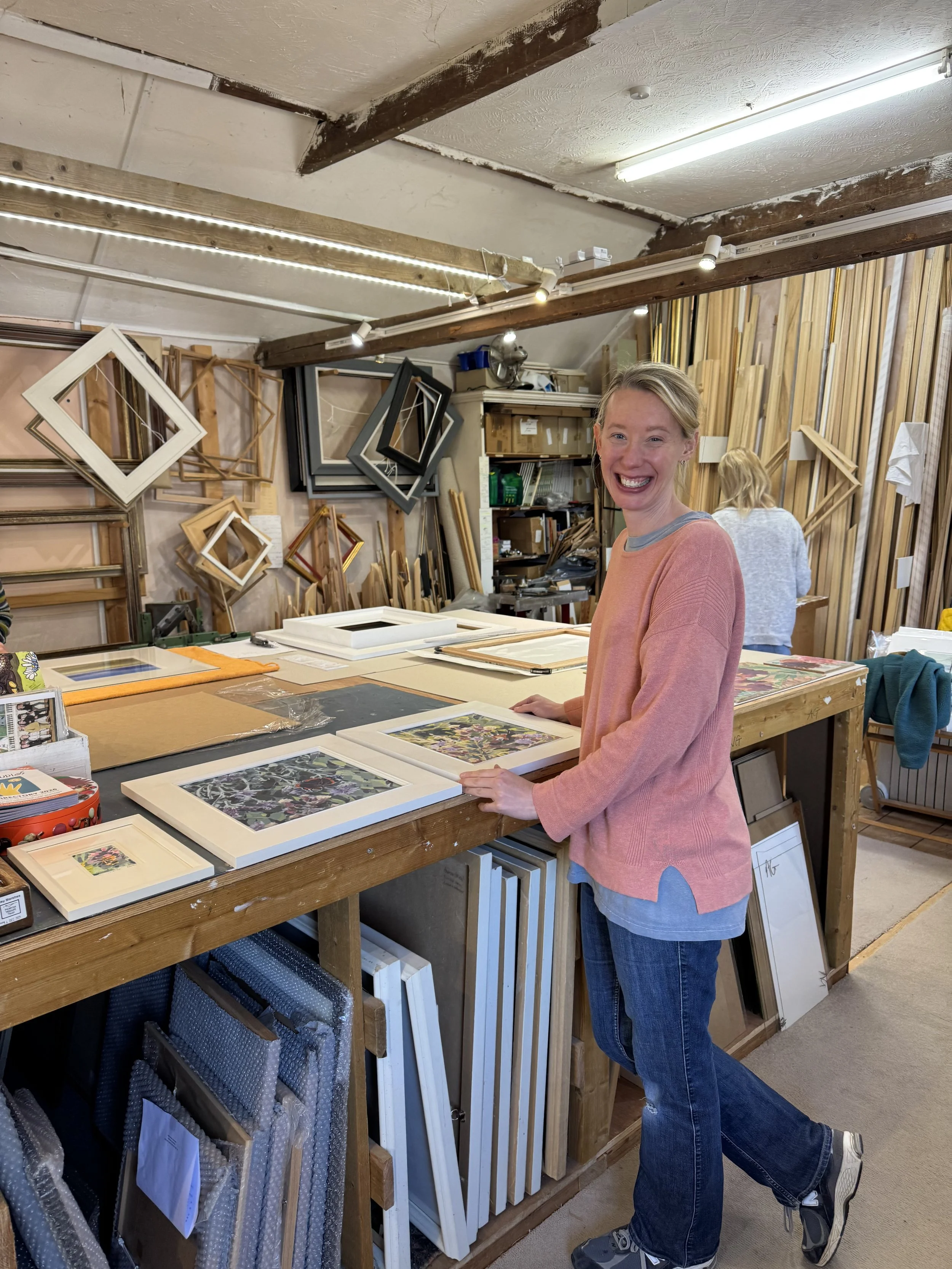
We have known Amie for a number of years and it was a treat to sit down with her recently to have a chat about her work and find out a little more about her art.
Q: Amie, it’s lovely to see you and to get a moment to talk to you about you and your art. You live here in beautiful Suffolk and it clearly has had an impact on your work?
Amie: Yes, I grew up in this wonderful part of Suffolk and I love going out into the garden and walking around the fields and hedgerows looking at the wildlife. I like to sit and observe the insects and moths and butterflies, I take my sketch book and draw from life.
Q: So, do your paintings relate directly to the things you see in the field?
Amie: Yes, they do relate to what I see but are not a direct representation. I sketch the wildlife together with the plants and later produce a painting or print based on my recollection.
Q: Is it right that you are known to set moth traps in the evenings?
Amie: Yes that is correct. Don’t worry, it’s a completely humane way to catch nocturnal insects and it gives me the perfect opportunity to study them closely and produce accurate sketches for my paintings and prints. It’s so much better to draw from real life and I am constantly astonished by the beauty and variety of the insects that are all around us but rarely observed. Everything is completely unharmed by the process and released carefully at the appropriate time.
Q: We see you work in different mediums are you always trying out new things?
Amie: Yes, fairly recently I was taught the technique of Japanese woodblock which I thoughly enjoyed and have been pleased with the work I am producing.
Q: Congratulations on now being a member of the Society of Wildlife Artists, that must be wonderful to have been recognised by them?
Amie: Yes, very much so and to participate in their annual exhibitions at Mall Galleries is great.
Q: Can you tell us how you got started painting?
Amie: Well I have painted for as long as I can remember. My dad is an artist (Andrew Haslen) and when I was growing up I remember thinking that everyone was a wildlife artist! My dad’s studio is here at home and there was always someone visiting who was also an artist which is why I thought that is what everyone did. I can remember one Christmas being asked what I wanted by everyone in my family and I told them all that I wanted art materials. So everyone took me at my word and I had a mountain of materials but nothing else and I remember then thinking perhaps I should have asked for a few other things as well!
Anyway, I guess I always wanted to draw and paint, my mum [Meggan] was a sign writer when I was small so I grew up in a very artistic house. When I was able I went to Aberystwyth university and studied fine art and print making. It was such a lovely place with magnificent scenery and was quite inspirational. My practice has developed over the years since I returned home in 2013.
My parents ran The Wildlife Gallery in Lavenham , as you know from the Becker exhibitions, and I helped out when I could so again I spent time with wildlife artists and their work. I think when I left university I actively resisted painting wildlife and focused more on landscapes but inevitably, I have been captivated by the abundance of wildlife that surrounds me and my home in rural Suffolk and I am never happier than when I am among it making my art.
Q:What projects are you doing at the moment ?
Amie: Over the last year I have had the great pleasure of being part of the Massingham Heath re-wilding project. Over 30 SWLA artists have been involved, documenting this special Norfolk farm and restored heath throughout the seasons.
l've been able to make quite a few visits, including a week long residency in May 25 and numerous day trips since then.
You can read more about the project on the SWLA website and hear Martha Kearney's open country episode recorded on the Heath on BBC sounds.
I have, of course, been concentrating on the plant and insect life, of both there is an abundance. Small heath, brown argus, dingy skipper, green hairstreak butterflies- small eggar caterpillars-moths, crickets, bees and bugs a plenty. Great swathes of mullein, scabious, poppies, kidney vetch and pockets of mouse-eared hawkweed, toadflax, rock-rose and clustered bellflower. And I'm only naming a few! It is a wildlife artist's playground, and more importantly a home for all of these living things. I have so many sketches and watercolours now and am producing work for an exhibition later this year. It is very exciting.
Q: All of your paintings are, a I may say, framed beautifully and you do them all yourself. How did that come to be?
Amie: Well, mum began the framing business and it has developed over the years we do a lot for galleries and artists and I began to frame my own work and have continued to do it. The frame is an extension of the work and I like to paint the frames so that they complement the work.
Q: We agree with you on the framing and you have very kindly framed a few ‘tricky’ ones for us with beautifully painted frames. The George Hammond Steel was the most recent one that comes to mind and it transformed the painting. Where do you see your work going in the future?
Amie: It is hard to say but I have enjoyed the project over the last year and am now involved in a smaller one closer to home which is very enjoyable. I think I will continue to paint and develop my print making and just see what happens.
Q: Thank you for your time Amie and we look forward to showing your work in our forthcoming summer exhibition.
Mark & Mel