Blondes Fine Art are always interested in purchasing the Bolton print series so do contact us if you are thinking of selling one.
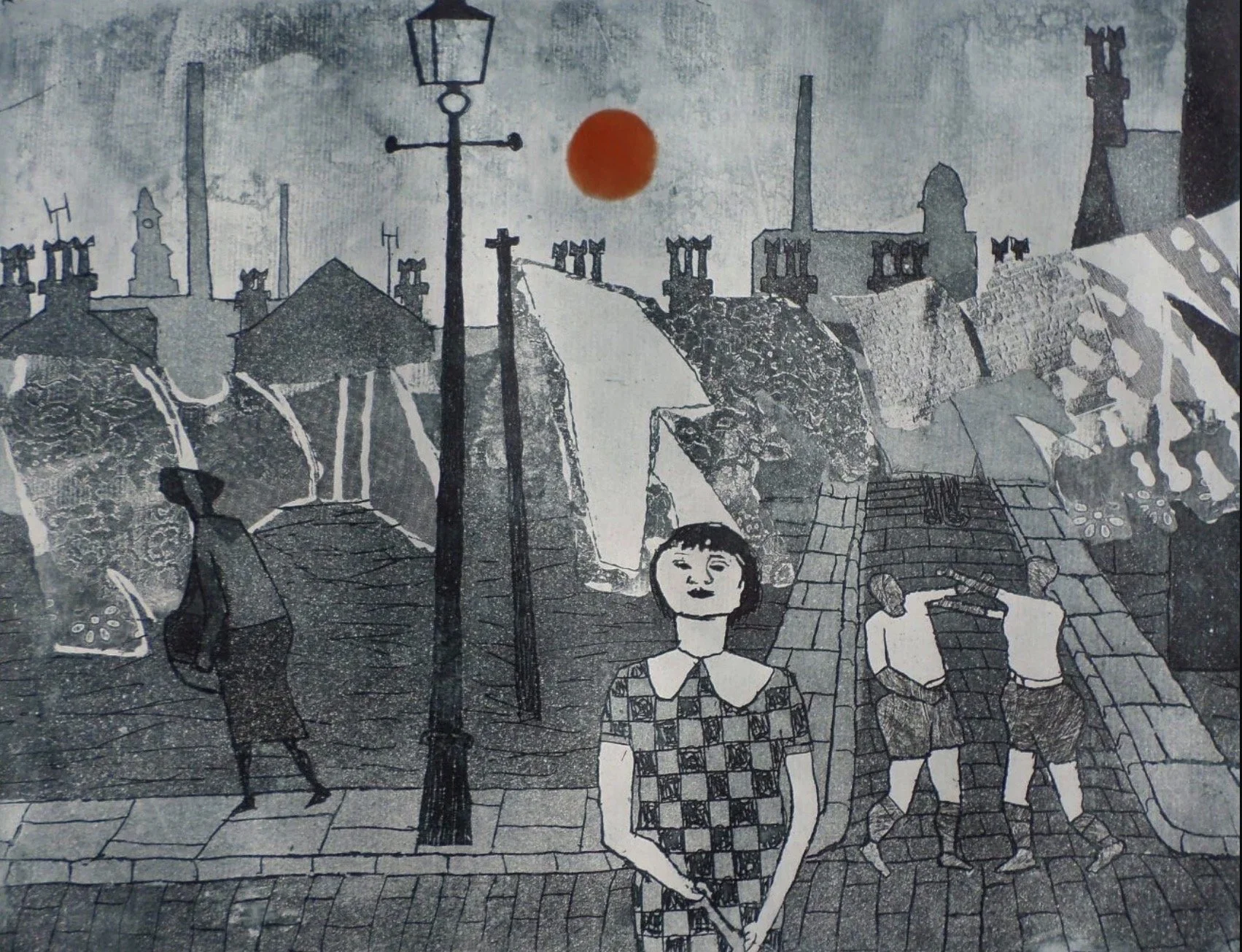
Julian Trevelyan, Mass Observation and the Famous Bolton Prints
Few artists are more closely associated with the visual legacy of the Mass Observation movement than Julian Trevelyan. While he is celebrated today as one of Britain's finest twentieth-century printmakers, his time working in Bolton during the late 1930s produced some of the most fascinating images of industrial Britain ever created.
Through collages, photographs, paintings and later prints, Trevelyan captured the spirit of a Lancashire town at a moment of enormous social change. His Bolton works remain among the most important artistic records of the pioneering Mass Observation project and continue to attract collectors of Modern British art today.
Julian Trevelyan and Mass Observation
In 1937, artist Julian Trevelyan joined the groundbreaking Mass Observation project, an ambitious attempt to record everyday life in Britain. Founded by anthropologist Tom Harrisson, poet Charles Madge and filmmaker Humphrey Jennings, Mass Observation sought to document ordinary people's lives rather than the views of politicians or institutions. Bolton became the project's first major field study and was given the codename "Worktown".
Trevelyan was invited by Harrisson to travel north and become one of the project's artist-observers. Unlike traditional documentary artists, he brought with him a Surrealist background gained in Paris and a fascination with experimental collage techniques.
The result was a body of work unlike anything else being produced in Britain at the time.
Worktown: Recording Everyday Life in Bolton
Mass Observation researchers immersed themselves in every aspect of life in Bolton. They observed workers leaving factories, people drinking in pubs, shoppers in the market, football crowds and families enjoying their leisure time. The aim was to create a complete picture of British working-class life.
Trevelyan's contribution was unique.
Rather than simply recording what he saw, he transformed industrial landscapes into imaginative compositions. Cotton mills, chimneys, terraced housing and factory skylines became the raw material for paintings, photographs and collages that combined documentary observation with artistic invention. Bolton Museum describes his work as among the most successful in expressing the ideals of the Mass Observation movement.
The Famous Bolton Collages
One of the most remarkable aspects of Trevelyan's Bolton period was his use of collage.
Carrying a battered suitcase filled with newspapers, magazines, catalogues, scissors and glue, he would set up in the streets and outskirts of Bolton, creating artworks directly from the industrial landscape around him. He famously incorporated fragments of newspapers and photographs into his compositions, turning scraps of printed material into chimneys, cobbled streets and mill buildings.
His 1937 collage Bolton remains one of the most important surviving works from the Worktown project. The piece depicts mills and factory chimneys rising above the town, while hidden newspaper fragments reference contemporary political events including the Spanish Civil War and the rise of fascism in Europe.
Today, these collages are recognised not only as important works of art but also as social documents that capture the mood and atmosphere of industrial Britain before the Second World War.
Julian Trevelyan's Bolton Prints
Although his early Bolton works were primarily collages, photographs and watercolours, Trevelyan later returned to the subject.
When Mass Observation revisited Bolton in 1960, Trevelyan joined the project once again. Following this visit he produced a series of prints depicting Bolton landmarks and street scenes, including views of the Market Hall and other familiar locations.
These Bolton prints are particularly sought after by collectors because they combine:
Historical significance
Strong regional interest
Trevelyan's masterful printmaking technique
Connections to the Mass Observation movement
For collectors of Lancashire art and Modern British printmaking, they represent an important intersection between social history and fine art.
Why Collect Julian Trevelyan's Bolton Works?
Interest in Trevelyan's Bolton-related works has grown steadily in recent years.
Collectors are attracted by:
Their connection to the famous Mass Observation project
Their importance in British social history
Their distinctive blend of Surrealism and documentary observation
The Worktown archive now contains hundreds of artworks, photographs and documents relating to the project, with Bolton Museum holding one of the most important collections of Trevelyan's Bolton material. The archive includes collages, watercolours, drawings, photographs and prints that provide a unique visual record of Britain in the 1930s and beyond.
Julian Trevelyan's Place in Modern British Art
Today, Julian Trevelyan occupies a distinctive position within Modern British art.
Unlike many post-war printmakers, he combined influences from Surrealism, documentary observation and social history. His Bolton works demonstrate how art can be both imaginative and historically important.
For many collectors, the Worktown collages and Bolton prints represent some of the most original works of his entire career. They show an artist responding directly to the realities of industrial Britain while bringing to the subject an inventiveness rarely seen in documentary art.
Julian Trevelyan Prints for Sale
At Blondes Fine Art, we specialise in Modern British prints and paintings, including works by Julian Trevelyan.
We are always interested in acquiring:
Julian Trevelyan etchings
Bolton prints
Worktown-related works
Signed limited editions
Original drawings and paintings
If you are looking to buy or sell a Julian Trevelyan print, we would be delighted to offer advice on availability, rarity and current market values.
Conclusion
The story of Julian Trevelyan and Bolton is one of the most fascinating chapters in twentieth-century British art. Through the Mass Observation project, Trevelyan transformed the industrial landscape of Lancashire into a series of powerful images that continue to resonate nearly ninety years later.
His Bolton collages, photographs and prints remain vital records of everyday British life and stand among the most important artistic achievements to emerge from the Mass Observation movement.